
Stephanie Swilley: Navigating Creativity, Authenticity, and Connection Beyond Boundaries
How to defy labels and stay true to your art


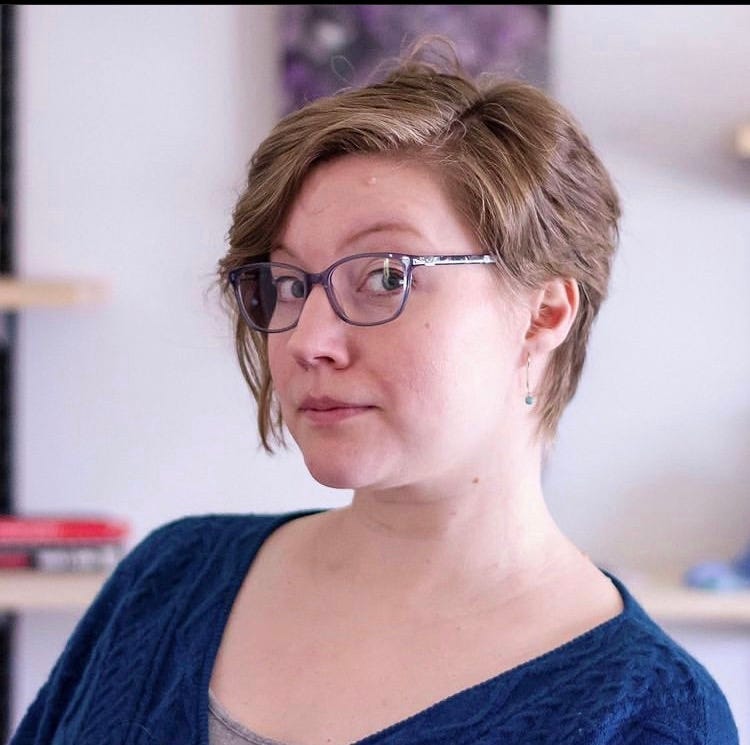
Stephanie Swilley is a shining example of the power of creative freedom. She is a community-taught artist from Northern Iowa, who has worked hard to overcome her fear of being labeled. Her journey ranges from musician to visual artist and offers a profound lesson for anyone who feels the weight of expectations.
Through Creative Nexus, Stephanie has created more than just an online community. She's built a safe space for artists, writers, musicians, and creators who rebel against traditional conventions. Her core belief is creativity knows no limits.
Her story isn’t just about art. It's a story for anyone who wants to build their own path to creative freedom.
Embracing the Creative Journey
You started your creative journey as a musician. How did your transition from playing bassoon to visual arts shape your creativity?
It’s interesting - I didn’t really consider myself a “creative” when I was a musician. I never enjoyed improv and really wanted to express what I thought others (the composers) were trying to communicate. My favorite part of music is how it makes you feel, and I’ve always been fascinated how absolute music (music for the sake of music, with no ascribed meaning) can prompt such an emotional response (I was often the one crying during performances). I think that need for expression and communication is what carried over into my visual arts and writing journey. My goal is always to create something that feels.
Starting an artistic journey in your 30s is a big undertaking. What was the moment that pushed you into this new creative path?
I was 27 when my first child was born. I was working fulltime in a corporate job while my partner finished his doctorate and I just kind of lost track of who I was. I met other young mothers who just lived for their kid (no shade, but that wasn’t me), but I struggled with a lack of identity. Looking back, I now know that I was struggling with depression for a couple of years.
In true ADHD form, I thought a friend’s daughter would enjoy some butterfly wings, so I researched dying silk, bought ALL THE SUPPLIES, and learned to hand-dye and paint silk. I found a space for myself in the silk, so I started creating hand-dyed silk scarves and built a business out of it.
Then we moved to Iowa in 2019 and COVID hit in 2020. In the year that my youngest was supposed to start pre-K, I ended up homeschooling both of my kids instead. After a few months, I knew the only way I was going to survive was to burn it all down and rebuild a life I loved.
This meant letting go of the silk scarves that were a life preserver and starting at the beginning (again) as a visual artist - learning to draw, learning to paint, finding my voice, playing with mediums.
Turning Passion into Purpose
You’ve built a business that encourages ignoring traditional creative labels. What made you develop this philosophy, and why is it so important to you?
I have always hated labels. Vehemently and with a passion. Labels always felt so closely tied to shoulds and should nots, and I’ve never been interested in anyone telling me what I should or shouldn’t do (I was obviously such an easy kid). I shunned most things associated with “feminine” (with the exception of cheerleading as a gifted student with the intent of proving the “airhead” stereotype false), marched sousaphone at 5’0”, and basically made sure to do whatever would be unexpected.
In my adulthood, however, I realized that forcing myself to live outside of the labels ascribed to me by society was preventing me from living in alignment with my preferences. Sometimes I identify new, more accurate labels (like multi-medium artist or agender woman), and other times I remind myself that the label is something I hold, rather than something that holds me (I’m an activist and anticapitalist, but I get to decide what that looks like rather than trying to fit into a premade mold).
What were some of the biggest challenges you faced while creating a business that defies these labels?
Every single step feels like reinventing the wheel, because there’s a wheel that works for landscape artists, a wheel that works for portrait artists, a wheel that works for muralists…but I haven’t yet found the wheel that works for chronically ill, low energy, anticapitalist, ADHD, conceptual artists who don’t want gallery representation and are unconcerned with selling, but also don’t have the reliable time and energy for grant writing.
You maybe wouldn’t think it’d be this way in the art world, but it’s hard to know where you fit when neat and tidy labels don’t apply to the work you do. I tend to live in semi-abstract and semi-realistic styles rather than fully within any style, and I definitely have a varied voice, which galleries tend not to like as much.
How has your journey, including being a self-taught artist, influenced your approach to supporting and guiding other artists?
I think being community-taught brings a unique perspective of understanding the struggle and embracing being a beginner in a different way. Any time we’re learning something new as adults, it’s such a drastically different experience than if we grew up in it. When you learn to ride a bike or roller skate as a child, of course you have a fear of falling and maybe a fear of being embarrassed, but you also don’t hit the asphalt from quite so far away and bounce a little better on impact.
When I started my bachelor’s for music performance, I’d already had 8 years of music lessons, so I’d slowly been establishing a base of knowledge in the safety of youth. I had years of slowly increasing difficulty in what I played alongside my skill-level. I was never a 2nd year student trying to play Stravinsky’s Rite of Spring.
When I started creating visual art, I’d had two 6-week art classes in middle school and that was all. I had to learn about mediums, substrates, adhesives, color theory, composition, form, archival-quality materials, and everything else while also trying to create the work that was in my head - concepts developed by an adult mind that had been loving art for decades. I was absolutely a beginner trying to create a masterpiece.
I definitely think that experience helps me to hold space for and validate the struggles other artists are facing. I also think that because I never went to art school and learned the “right” way to do things, I can hold firm to my belief that, in the arts, there is no one “right” way.
Fostering Collaboration and Growth Through Creative Nexus
You’ve created Creative Nexus as a space for artists to collaborate and push beyond their boundaries. What inspired you to create this community, and what makes it different from other artistic communities?
Creative Nexus is the result of my transition from musician to visual artist/writer and the fact that my partner is a professor of music composition. We spend many hours talking about our work, how we think, what our processes are, and how these things all relate to each other and the world at large. When I began my journey as a visual artist and struggled with planning a piece, I would sit down with my partner and talk it through. His thought process was always rooted in music composition and often shifted my mindset to allow me to look at things in new ways that I don’t think I would have come to on my own.
I’ve never seen another artistic community that focuses on interdisciplinary collaboration, but I think the inspiration and variety of perspectives from an interdisciplinary group cannot be matched in any other way. When a visual artist is helping a writer push past writer’s block, or a composer is helping a visual artist plan a cohesive body of work, you get ideas and inspiration that aren’t constrained to what’s already being done in our area, but rather new ideas to explore.
Can you tell us how the community nurtures a sense of creative freedom?
We’re currently in our second residency and my favorite aspect is that there are no rules, no expectations. We focus a lot on the process of exploration rather than a product, and you are allowed to follow wherever inspiration is steering you. I know that is scary for a lot of people and can leave you with the blank-page paralysis, so we use prompts and loose frameworks as guides, but the goal is just to get started and see where things lead. And maybe you’ll hate what you created! But you’ll still have learned something in the process, and that’s the important part.
One amazing aspect of Creative Nexus is its “Pay What You Can” model. How does this open up creative opportunities for artists who would otherwise be excluded from paid programs?
The art world is expensive. It’s a lot of pay-to-play, know the right people, etc, etc. And I hate it. I hate gate keeping. When I started Creative Nexus, I wanted it to be on a pay-what-you-can model eventually, but I started with paid only because the technology to run it isn’t free, plus everyone talks about how people are more likely to show up if they paid for it. And I wanted people to come! A community can’t be a community if no one comes.
But after the election results in November, I knew it was time for me to start living in the world I wanted to be real, in whatever way I could. So I opened up Creative Nexus on a pay-what-you-can (including free) because I don’t believe we should be excluded from community based on our bank account. And wouldn’t you know, people who have the financial flexibility pay and are making it accessible to more people. This is the world I want to live in.
Finding Balance: Creativity and Business Growth
As you continue to grow Creative Nexus, how do you balance your own creative energy with the demands of running a community?
I actually find Creative Nexus helpful in managing my creative practice! This was part of how I designed it: I created the community that I need in my practice. Between the community support and brainstorming that happens at Deconstruct sessions (these always leave me with so much new creative energy) and the Coworking sessions and Virtual Studio times, I find myself energized and with the structure I need to actually do.
What do you think is the biggest challenge creatives face today, and how do you help them navigate it within your community?
I think one of the biggest challenges creatives face today, especially if they’re trying to make a business out of it, is trying to stay true to their own authentic self. There is so much information coming at us all the time, telling us that we have to go viral, we have to be prolific, we should watch the trends, we should use Pantone’s color of the year, make stickers, be in a gallery…but really, what we need to do is live and create in alignment with our values.
Bridget Baker (bridget baker branding ) shared a writing prompt about what our secret superpower is, and I think mine is my ability to hold multiple truths at once. I think this helps me to hold space for each person’s authentic values, goals, and feelings - even (and especially) when they aren’t the same as mine. I don’t think I can solve anyone’s problems, but I do know I can hold space and help them stay aligned with their values.
Many artists, especially self-taught ones, struggle with impostor syndrome. What advice do you have to work through it?
My biggest advice for dealing with imposter syndrome is to find a community that will believe in you when you forget to believe in yourself. The vulnerability necessary to be an artist who shares their work is not something most of us can carry on our own. We will trip and fumble. It’ll get too heavy and we’ll have to set it down. But having that community (not just one person) that believes in you means that many hands are holding it for you, making it lighter, or picking it back up for you when you drop it.
Building Connection Without the Hustle
You’ve talked about how traditional art business advice didn’t work for you. What traditional advice did you follow, and what actually ended up working for you?
In visual arts, I tend to see two main paths: content creators (the folks who do really well on social media and have huge followings) and traditional representation by galleries. Remember how I don’t like being told what to do?
Well, I refuse to play the algorithm game. I cannot make myself post for the sake of posting, or worry about trending audios, or trending reels, or hashtag research. It’s also not in alignment with my values to put my art on tons of print-on-demand products and sell, sell, sell, as one of my values is minimizing consumerism.
As far as gallery representation, they typically like artists with a very specific and identifiable voice, and I don’t like feeling limited.
I have nothing against those who choose to pursue these paths, but they aren’t the right fit for me. Instead, I have a goal of finding a community on Patreon who believes in the work I do and supports me there, simply for the sake of supporting the work.
For creatives who struggle to market themselves authentically, what’s one piece of advice you’d give to help them move forward?
Take the time to truly understand your values and needs (and which are which). It’s easy to be swayed and distracted by all the shiny objects out there, but always evaluating choices against your values will keep you true to yourself. And give yourself some grace if your needs sometimes conflict with your values (because we can’t control that we have to pay to keep a roof over our heads).
Advice for Standing Out
Looking back at your early days as a creative, what's one piece of advice you'd give yourself before creating your business?
Start small. One thing at a time. It will come together just fine.
What's one book, podcast, or resource that had a profound impact on your creative journey and business approach?
Tracy Stanger! I built Creative Nexus in The Space You Want and being able to use her Sort, Purge, and Organize course to build something in alignment with my life, needs, and values was huge. But the true magic was being able to come to Junk Drawer sessions with my preconceived “shoulds” and have her debunk it all and help me find ways that worked for me. AND Samantha Crockett (@EnthusiasticSamantha) was in my cohort and became a go-to brainstorm partner.
For creatives who aren’t sure how to break out of traditional boundaries, what's one action they can take today to start showing up authentically?
Oooo, that’s a good question. One of my favorite questions to ask myself is, “If I was guaranteed to succeed, what would I create right now?” Once I have an endpoint, I spend some time figuring out what steps I would need to take to get there, and if I’m stuck somewhere, I do some interdisciplinary brainstorming to help me get out of my box. Creative Nexus would be a great community to help you along the way (wink, wink)!
Final Thoughts
Stephanie Swilley’s journey is a powerful reminder that creativity knows no boundaries. She has created a space where artists can break free from expectations, embrace their full creative potential, and support each other. Stephanie’s story shows us that success in the creative world isn’t about fitting into predefined boxes, it’s about building your own box.
If Stephanie’s story resonated with you, let her know in the comments! And if you know a fellow creative entrepreneur whose journey deserves to be shared, we’d love to hear from them.
Drop a comment, share this interview, or subscribe for more inspiring conversations with people who are making a mark on the world in their own unique ways.
 | A guest post by
|
 | A guest post by
|
Ahhhh, Kevin!! Thank you for such a beautiful piece 😭 it was such an honor to be interviewed by you!