
She Couldn't Type Her Book, So She Spoke It Instead: Tiffany Yu's Author Journey
Turning her disability into an advantage.

What if the tool everyone else uses isn’t the only way in?
Tiffany Yu is the author of The Anti-Ableist Manifesto and the founder of Diversability, an organization she built to help disabled people move through what she calls their shame-to-pride transformation.
She was in a car accident at nine years old where her arm became permanently paralyzed. And she lived a decade feeling like there was no community built for someone like her. So she built one.
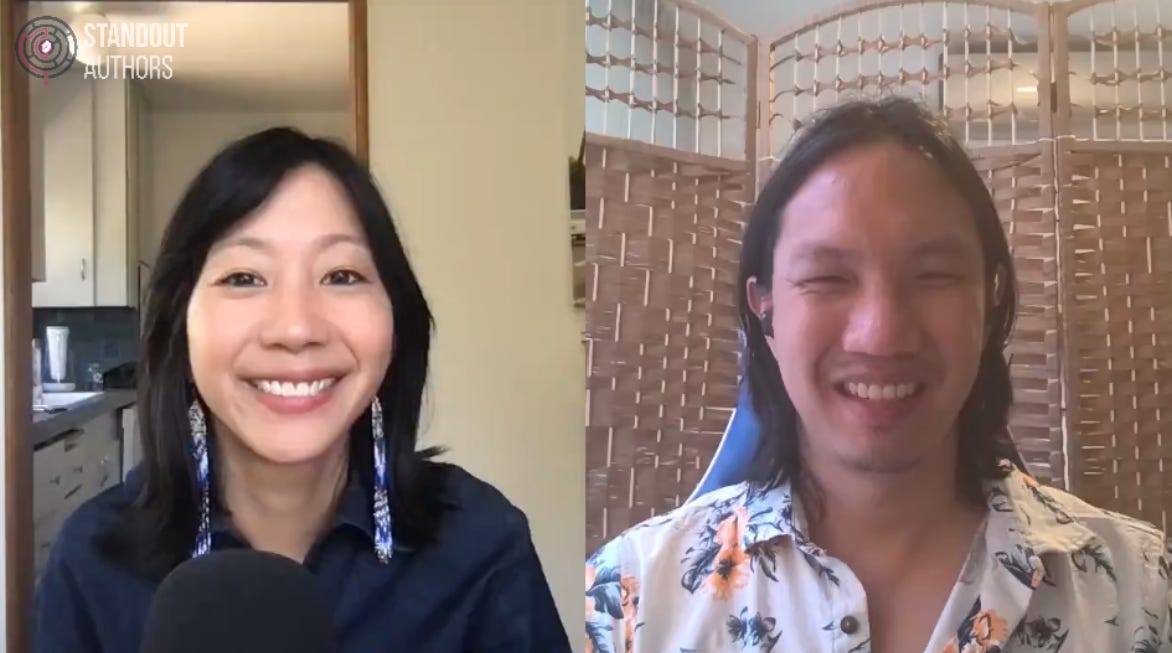
In this conversation, Tiffany talks about how a literary agent found her through a fifteen-second TikTok, why she recorded her entire first draft instead of typing it, and how a book that almost didn’t get written on time ended up shaping a movement she never expected to be part of.
Highlights
She’s building the thing she wished existed.
Tiffany didn’t come into disability advocacy through a career plan. She came into it through a decade of isolation, watching nine-year-old Tiffany go without the community she needed most.
“I’m building and funding the things I wish existed when I was younger.”
That’s the whole engine behind Diversability, the book, the TikTok series, all of it. It’s a memory of what was missing, turned into a mission to make sure the next person doesn’t have to go without it too.
She didn’t write the book. She spoke it.
Tiffany types with one hand. She knew from watching other writers develop injuries from overuse that typing an entire manuscript wasn’t sustainable for her body. So instead of forcing herself into the process everyone else uses, she built her own.
“What are some creative ways that I can continue to write this book, lean into my strengths?”
She recorded every chapter using a speech-to-text tool called Otter.ai, turned the transcripts into a rough skeleton, and edited from there. When she shared this publicly, she heard from people with hand injuries, arthritis, and their own barriers to writing, people who’d quietly given up on the idea of ever finishing a book.
“Essentially, what I’m doing is you want a book, the way I’m going to do it may look different, but eventually you will get the book, right? I’m just doing it a little bit differently.”
You don’t have to follow the same road everyone else takes, just the one that actually works for you.
The book found her before she went looking for it.
Tiffany wrote a letter to her high school guidance counselor once, mentioning that maybe someday she’d write a book. She forgot about it for fifteen years. Then a literary agent found her through a short-form TikTok series she’d started almost by accident, and a few months later, a publisher reached out directly before she’d even finished her book proposal.
“Hachette at that particular point in time had also published books from a lot of my fellow disability advocate friends.”
She got the book deal on November 11th, 2022.
“I don’t know about you, 11.11 is meaningful if you are someone who views repeating numbers as what I like to call gentle nudges from the universe or messages that you’re moving in the right direction.”
Nobody plans for a book deal to arrive before the proposal is finished. But sometimes the work you’ve already been doing publicly is the proposal, whether you meant it to be or not.
Structure the book so people can find what they need.
Tiffany built her book around a framework called Me-We-Us: what you need to understand about yourself, what you need to understand in relationship with others, and what all of us need to build together to create real change.
“I think too often we jump to part three because we’re like, okay, policy change, let’s get to it. But if you haven’t done the internal work, the me, like why do I care so much about this particular topic, then you’re actually gonna jump to a place and it’s gonna feel performative.”
Every chapter title is the takeaway of that chapter, on purpose. Because unlike fiction, where mystery pulls the reader forward, a book meant to create change has one job: help someone find exactly what they need, exactly when they need it.
Make yourself impossible to forget.
Tiffany’s book cover is orange. It almost wasn’t. And she leaned into that color so hard it became part of her.
“I made my whole personality an orange book cover.”
She kept her title short enough to include both roles that mattered to her, author and founder of Diversability, so that even a passing glance could spark curiosity in someone who didn’t know her yet.
Standing out doesn’t require being the loudest voice in the room. All it takes is being unmistakably you.
The book creates connections you never planned for.
Tiffany didn’t expect her favorite part of the whole process to be the book events. But she learned to love the rooms full of strangers who showed up because of something she wrote.
“There are two people who were on my launch team, who one lives in Los Angeles, the other lives in New York. They met through the launch team, kind of stayed connected, had a lot of other points of connection... and they just met in person for the first time in New York, like maybe a month ago. And that’s pretty cool.”
A book doesn’t just reach a reader. Sometimes it introduces two people who never would have found each other otherwise, and gives them a reason to build something together long after they’ve turned the last page.
Purpose makes it last.
Tiffany doesn’t measure the success of her book by a single launch day. She measures it by whether the message is still doing something, still reaching people, long after the initial noise has faded.
“I want people to feel hopeful that creating an accessible, disability inclusive society is possible. And I want people to not only feel hope, but know that their action in collective action is what is gonna create change.”
That’s the difference between writing something for the moment and writing something built to outlast it.
Closing Reflection
Tiffany Yu didn’t write her book the way anyone told her to. She spoke it instead of typing it. She structured it so a reader could skip straight to the chapter they needed. She picked an orange cover and made it part of who she is. None of it followed the rulebook, and all of it worked.
“You are gonna be the one who is the most excited about your book.”
Tiffany reminds us that you’re allowed to build the process that fits you, and still end up with something that changes the room.
If you’re an author with a story worth sharing, leave a comment and tell us about your work. You deserve the spotlight too.