
Navigating Entrepreneurial Survival in Real-Time with Jacki Hayes
Building business resilience without the hustle


Jacki Hayes is living the entrepreneurial journey most people are afraid to talk about. With just $23.18 in her checking account and a business account hovering near zero, she’s not here to share a polished success story. She’s documenting survival.
As a systems strategist who helps creative entrepreneurs, Jacki is turning her own financial challenges into a case study in resilience. She’s embracing transparency, challenging the myths of hustle culture, and developing sustainable strategies. She’s not just trying to keep her business alive, but helping others do the same.
Roots of Resilience

Your background in ecology gives you a unique way of looking at business. How has that shaped the way you build systems for creative entrepreneurs?
Running a business is a lot like managing an ecosystem—it works best when things are diverse, adaptable, and not overly engineered. My background in ecology taught me that no two systems are identical (thank the fungi), and that principle runs deep in how I build systems for clients. I don’t do rigid templates. I build frameworks that flex with your energy, your goals, and your real life—not your ideal week that never actually happens.
And just like nature, we build in feedback loops. Regular check-ins, reflection points, and space to pivot when things aren’t working. I even borrow the concept of “appropriate disturbance”—because sometimes, yeah, things need to break a little before they can evolve. I’m not here to help you build something perfectly efficient. I’m here to help you build something resilient.
What natural survival strategies do you see reflected in your own business journey?
Symbiosis, dormancy, and diversification—basically, I run my business like a smart plant. I collaborate with folks whose strengths complement mine instead of seeing everyone as competition. I’ve pulled back during tough seasons (hello, strategic dormancy) to regroup and reallocate energy where it matters. And I’ve diversified—income streams, offers, how I show up—so I’m not putting all my creative eggs in one basket.
I’m not chasing endless growth for the sake of it. Nature doesn’t sprint 24/7, and neither do I. My business is built to survive the long game, not just the next quarter.
The Turning Point
Your Substack essay about financial struggles was raw and real. What made you decide to share it so openly, in the moment?
Honestly? I was just really tired of pretending everything was fine. There’s this weird pressure in online business to act like you’ve got it all figured out—even when you’re calculating how much cereal is acceptable for dinner. That day, I hit a wall and thought, “If I can’t find people being honest about this, maybe I need to go first.”
It wasn’t some strategic vulnerability play. It was survival. And it ended up being one of the most connective things I’ve ever written.
How has that honesty changed the way you connect with your audience and clients?
In every way that matters. When you lead with honesty, it acts like a filter. The people who want perfection fall away (thank goodness), and the ones who value real connection stick around. My clients don’t come to me trying to impress me—they come ready to work through the real stuff. And that means we get to solve actual problems, not the ones they think they’re “supposed” to have.
It’s made the work deeper, more creative, and frankly, more fun. We’re not just checking boxes—we’re building something that feels true.
Systems as Support

You specialize in creating systems that work for real people, not just ideal circumstances. What are some of the biggest misconceptions entrepreneurs have about systems?
First off: most people think a “system” means a tool. Like, “Oh yeah, I have a system—it’s in ClickUp.”
But a system isn’t just the app. It’s the full ecosystem of what needs to happen, when it happens, who does it, and how it gets done—plus how you know if it’s working. Tools support a system, but they’re not the system itself. If all you have is software and no process? You’ve got a digital junk drawer, not a system.
Second: people think systems need to be complicated or fully automated to count. (They don’t.) Sometimes the most sustainable option is a Google Doc and a recurring calendar block. If you abandon it because it’s too much, it’s not a system—it’s a trap.
Third: people expect systems to be static. Set it once and never look back. But systems should evolve with your business—just like you do.
And finally: people think systems kill creativity. But when you build them right? They protect creativity. They give your brain breathing room. They remove decision fatigue and let you get back to doing the work you actually love.
How do you help creatives build systems that support both their creativity and financial sustainability?
We map their client journey—start to finish. From first inquiry to final goodbye (ideally one that doesn’t feel like ghosting), we break it into clear stages: inquiry, onboarding, delivery, offboarding. Then we look at how each stage feels right now vs. how they want it to feel.
From there, we design systems that support both sides of the equation:
Admin flow (like client offboarding emails, intake forms, lead tracking)
Energy protection (so you’re not context-switching 47 times a day)
Revenue clarity (like making sure you’re not undercharging or overdelivering by accident)
We build workflows that actually work—with automations where they help, human touch where it matters, and clarity baked in throughout. So instead of reinventing the wheel with every client, you’re following a well-worn trail. And you can focus on your magic, not chasing down invoices or wondering what comes next.
Navigating Uncertainty with Strategy
When business feels unpredictable, we often get stuck. How do you guide entrepreneurs through uncertainty while keeping their long-term vision intact?
I’m a big fan of separating what’s in your control from what isn’t. A lot of business advice is just polished panic. I’d rather help you find the 2-3 high-leverage things you can do and build from there.
We create a “minimum viable strategy”—a small, simple plan that moves you forward without locking you into something rigid. And we track just a few metrics, the ones that actually matter.
We anchor all of it in your “why”—the deeper reason behind what you’re building. That’s the compass when everything else is foggy.
What’s one practical step a creative entrepreneur can take today if they feel stuck?
Make a “decision minimizer.” Grab a notebook (or a Notes app, I’m not your mom), and list 5 decisions you make on repeat that drain you. Pick one, and create a default. Maybe it’s a pricing formula. A default yes/no for types of clients. A standard process for when someone DMs you a vague “hey can I pick your brain?”
It doesn’t mean you always stick to it, but it gives you something to fall back on. Less spinning, more doing.
Community and Vulnerability
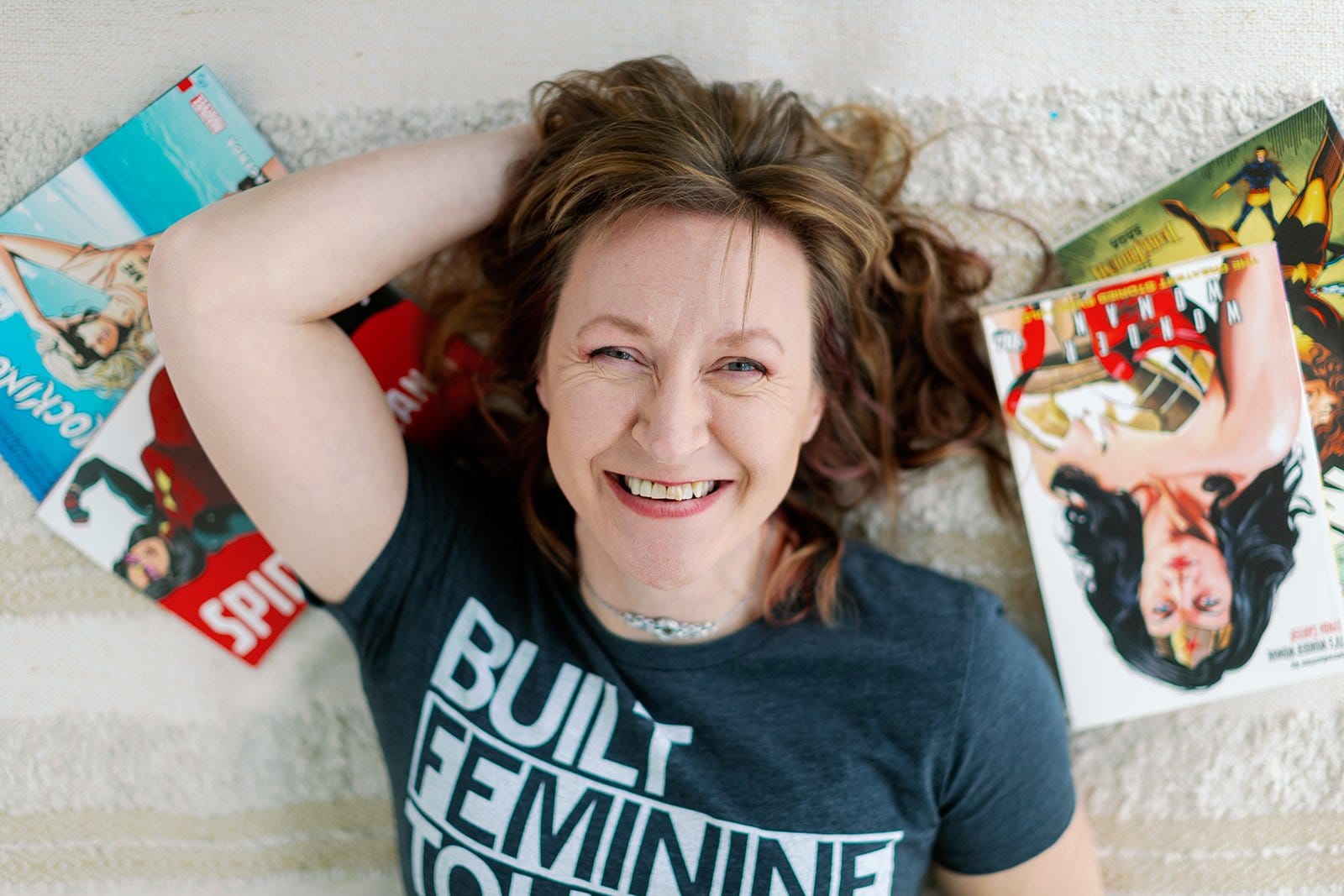
So many business owners feel isolated in their struggles. What does true support look like in entrepreneurship, and how can people cultivate it?
True support isn’t just someone clapping for your launch. It’s someone who texts you “do NOT lower your prices” at 10pm and means it. It’s someone who understands your business brain and your nervous system.
To cultivate that, you need more than networking. You need actual relationships—people who get your values, not just your industry. Join communities that feel safe enough to show your messy middle, not just your finished case studies. And don’t just pop in when you’re in crisis. Build relationships that aren’t just emergency exits.
How has vulnerability played a role in strengthening both your business and the businesses of those you help?
When clients show up and say, “I’m embarrassed that I still don’t have a proper onboarding system,” I get to say, “Cool, let’s fix it.” Not, “How dare you.” Vulnerability lets us go deeper, faster—and it builds resilience. Every time we face a messy thing together and get through it, they leave stronger and less afraid for the next time.
Reimagining Success
Hustle culture tells us success is about constant growth, but you take a different approach. How do you define success for yourself and your clients?
I define success as intentional sufficiency. Enough income to feel steady. Enough time to rest. Enough creativity to still love what you do. More doesn’t automatically mean better—it often just means busier.
Success for me includes working 25-ish hours a week, taking extended time off for travel, setting my own hours, and not needing to panic when I log into bank accounts. For clients, we define metrics that reflect their actual goals: quality of life, creative energy, consistent income without burnout. We ask, “What’s the right size?” not “How big can this get?”
What do you think needs to change in how we talk about sustainable business growth?
We need to stop pretending growth is a straight line. Nature doesn’t work that way—there are seasons, dormancy, cycles. Sometimes growth means standing still long enough to deepen your roots.
We also need to include the founder’s wellbeing in the sustainability conversation. If your business is scaling but you’re unraveling in the background? That’s not success. That’s a system failure.
Let’s normalize celebrating plateaus, honoring your energy, and growing on purpose—not because Instagram said you should.
If you found this helpful or inspiring, consider supporting my work by buying me a coffee. And if you're looking for more creative inspiration, check out my book We Are All Creative — it's full of prompts and quotes to fuel your creativity every day!
Final Thoughts
Jacki Hayes is proof that entrepreneurship isn’t about having all the answers. It’s about resilience, adaptability, and building something that works for real people. By sharing her unfiltered journey, she’s challenging outdated narratives and redefining what business success can look like.
If her story resonated with you, let her know. And if you know another entrepreneur who’s rewriting the rules, drop a comment below. I’m always looking for conversations that highlight the human side of running a business.
If you enjoyed this conversation, share it with a fellow creative entrepreneur or subscribe for more interviews with people making their mark in unexpected ways.
 | A guest post by
|