
Listening, Language, and the Spaces Between with Maya Sarin
And how to balance strategy and soul


Standout Authors Unbound amplifies the voices of underrepresented writers and indie authors to disrupt an industry that rewards conformity over authenticity.
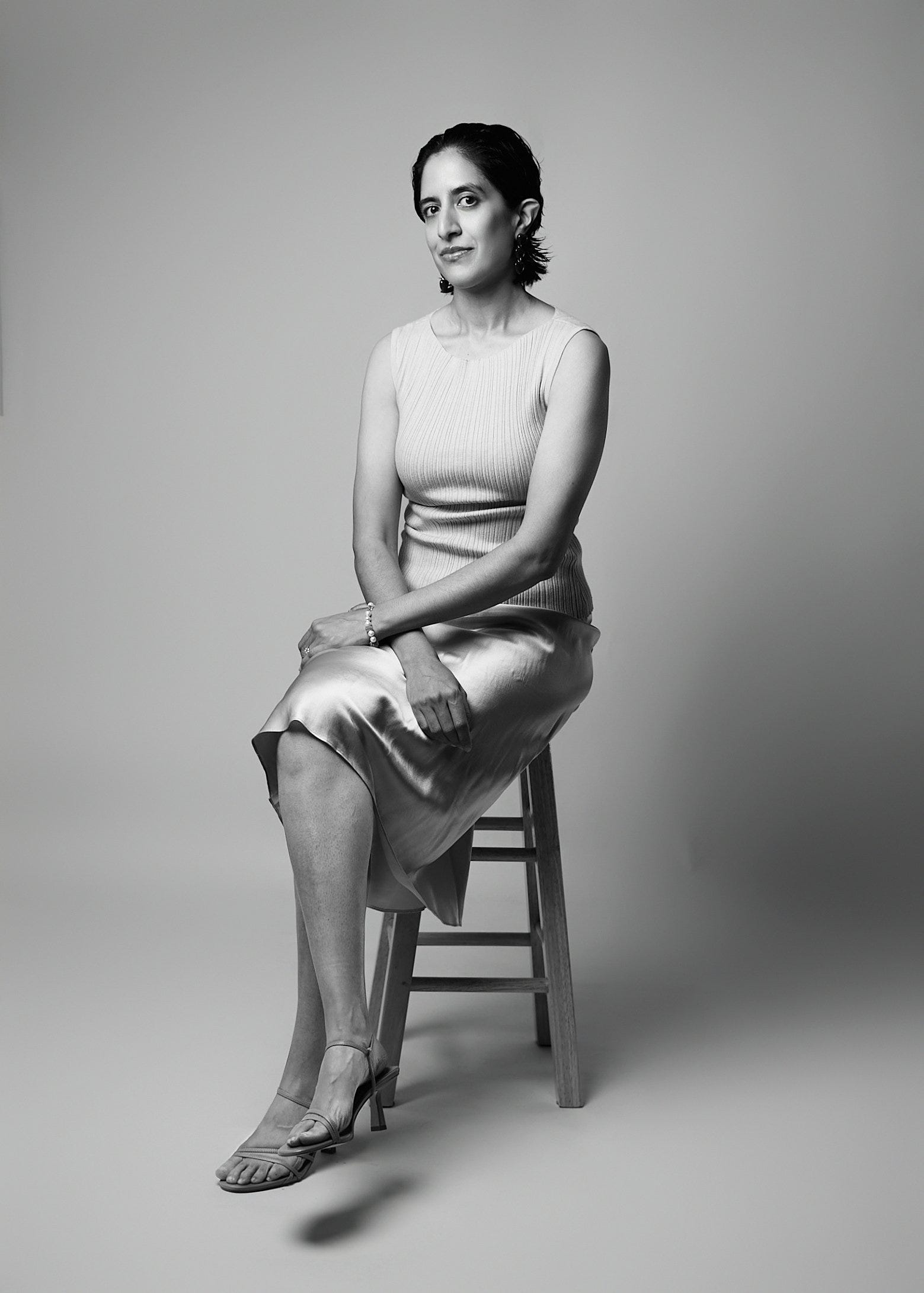
Maya Sarin’s work sits in that rare space where strategy meets soul. She’s a poet, ghostwriter, and voice guide who helps founders find and amplify their voices.
Her Substack, Just This, is like a quiet room in a noisy world. It’s a space where poetry and presence meet.
In our conversation, we talk about what it means to listen for your voice instead of forcing it, and how standing out can sometimes start with saying less, but saying it honestly.
So, let’s start at the beginning with the story behind her words and work.
Beginnings & Becoming
Let’s start at the beginning. Who were you before the poet, the ghostwriter, the guide and what pulled you toward language and story?
My first formal experience with writing began at my college newspaper. Although I was drawn to storytelling, I ultimately earned a business degree, believing it would offer more practical career opportunities. After entering the cosmetics industry, I built a career in global beauty marketing and editorial, where I was especially fulfilled by the creative aspects of brand building, crafting product copy, and sharing ideas through blogs. Over the years, I’ve created eight blogs and newsletters, including three for companies I worked for. Writing has always been my lifeline—a way to share perspectives, educate, and inspire others.
Who influenced you to become the writer you are today?
The writer I am today is very different from the girl who once chased beauty trends and analyzed product ingredients. A life-changing illness a few years ago became my greatest teacher, guiding me toward poetry. During recovery, I began to write, and the process was profoundly cathartic. Around that time, a friend introduced me to The Artist’s Way by Julia Cameron, which deepened my creative practice and strengthened my voice. In 2024, I completed my first book of poetry, a collection exploring healing and transformation, which I hope to publish next year. Through that journey, I discovered my true calling: to help heal others through words.
You’ve lived and worked across New York, London, India, and now San Francisco. How have those places and experiences shaped the creative you’ve become?
New York taught me pace and stakes. London taught me care with language. India rooted me in devotion, tradition, and multi-cultural storytelling. San Francisco loosened time; it’s where I overcame illness and healed, and where ‘awe walks’ became a practice. Each city gave me a different ear.
The Work Beneath the Work
You describe what you do as translating the unspoken. What does that actually look like in practice?
From a poetry point of view, it’s metabolizing experiences. It’s not just about describing what happened but revealing what it meant. The poem begins where logic ends. Writing poetry is like listening to water…you catch the wave, not command it.
Sometimes I think poetry is my truest practice of attention. It teaches me to see again, to name without rushing, to dwell in ambiguity.
From a ghostwriting point of view, “translating the unspoken” looks like this in practice:
I listen beneath what someone says to hear what they mean. I note their rhythms, the phrases they repeat, where their voice softens, and where it tightens.Before we start any writing, we map moments—pivots, thresholds, non-negotiables—and build a living “Voice Map” that captures cadence, style, lexicon, and boundaries.
When you’re helping a founder find their true voice, how do you know when you’ve found it? What tells you the words finally sound like them?
When the founder stops editing for correctness. They say things like, “Oh, I couldn’t have said it better.”
The Art of Listening
A lot of writers talk about “finding their voice.” You talk about listening for it.
I talk about listening rather than “finding” because voice isn’t a costume—it’s a current. You don’t manufacture it; you make room for it.
Where did that approach come from for you?
That approach came from a season of illness and recovery. I was forced to slow down to a level many of us rarely experience in modern society, where we’re constantly in motion. My vessel opened in ways I’d never known before, allowing deeper truths to emerge. Now that I’m no longer living at that pace, it can be challenging to maintain that level of openness, but the awareness remains.
Between Strategy and Soul
You’ve spent over a decade at the intersection of brand, marketing, and storytelling.
How have your corporate and creative backgrounds shaped the way you approach your work today and how do you balance strategy and intuition?
My corporate and creative backgrounds gave me structure and process. They also taught me the importance of knowing your audience—who you’re speaking to and why it matters.
In terms of balancing strategy and intuition: strategy sets the frame (audience, promise, proof); intuition fills it honestly (tone, timing, truth). I believe in measuring what matters without optimizing the life out of it.
The Practice of Presence
Your Substack, Just This, feels like both a creative practice and a spiritual one. What inspired you to start it?
I started Just This because I wanted to connect more deeply with other poets, writers, creators, and anyone on a spiritual path. I wanted to build a platform where my words could reach more like-minded people. I began sharing my poetry on Instagram, and at the moment, I’m focusing on Substack.
How does the idea of “just this” guide the way you write and live?
The idea of “just this” guides me by asking, “what’s here—right now?” Not the whole arc, just the next breath, the next clear sentence. It’s both a creative and spiritual directive.
When you sit down to write a poem, what’s usually the spark? Is it a moment, a feeling, a fragment of thought?
I sit down to write a poem after inspiration strikes. It’s often sparked by a small event such as black phoebe landing on the same post, the light shifting, or an insight behind certain synchronicities. I write when an image or thought refuses to let me look away.
Essence & Expression
You’ve said your gift is giving form to essence.
What does “essence” mean to you when you’re writing for someone else?
“Essence” is the felt truth that precedes language—the why beneath the work. It’s our intuition at work. When I write for someone else, I like to think of me shaping a vessel strong enough to hold that heat without spilling.
What’s the hardest part about helping someone see their own voice clearly?
The hardest part is helping someone release borrowed voices—industry jargon, social media tone, old armor—and trust what feels true, different, or vulnerable (even if it feels “cringe”).
What’s the most rewarding part about helping others share their stories?
The most rewarding part is knowing I play a small role in helping someone’s story be heard. I believe each of our stories can serve as a guide for others. But because of time constraints or self-limiting beliefs, many people don’t share their words—and I love being part of the bridge that helps them do so.
Visibility & Voice
Many authors and creatives struggle with being seen.
What’s your relationship with visibility?
I used to confuse visibility with volume—constantly producing content in effort to keep up with everyone else or writing in a certain “optimized” way. That might mean clickbait headlines or chasing whatever everyone’s talking about.
Has it changed over time, as your work and identity have evolved?
Now I see visibility as stewardship, especially after the illness. Being seen means letting your work stand in its right size and in its own truth—no shrinking, no shouting, no imitation. It’s less about performance and more about presence: sharing the truth as it naturally emerges.
Impact & Invitation
What do you hope people feel when they read your words (From you poems, brand stories, or reflections)?
When people read my words, especially my poetry, I hope they feel inspired, steady, relieved, and gently courageous to tell the truth. I want readers to feel empowered, like someone turned on a light without blinding them.
Who are other authors in your circle that you know or have ghost written for that deserve the spotlight?
I’d love to highlight a few fellow poets I deeply admire. I met these wonderful writers on Instagram; the poetry community there is so supportive and brilliant. So many more names but here are a few:
And finally… if standing out isn’t about shouting louder, what does it mean to you?
Standing out is standing truer: saying what only you can say…what is uniquely yours to share. It’s also letting the work carry your name because it carries your care.
Maya’s work reminds us that standing out can be as simple as slowing down enough to hear your own words—and trusting the right ones will find their way.
This is exactly why I started Standout Authors Unbound. To make room for voices like Maya’s, to show you how to tap into yourself.
If you or someone you know is exploring a similar space, share this piece or leave a comment below. The next story we tell could be yours.
 | A guest post by
|