
How to Craft a Creative Business Using Strategy & Heart with Morgan Jungels
Lessons from a marketing expert.


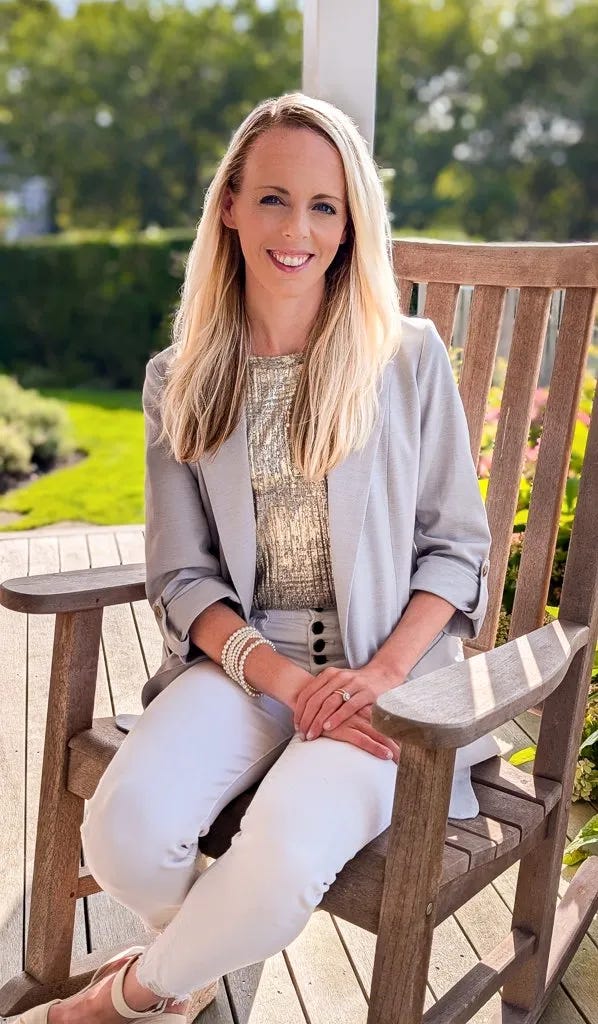
Morgan Jungels has spent nearly a decade crafting award-winning marketing campaigns for industry giants like LEGO, John Deere, and ESPN. Now, she’s using that expertise to help creative entrepreneurs build powerful brands in her small business marketing studio, Atlas & Anchor.
Her approach blends strategy, design, and storytelling to help businesses cut through the noise and communicate their unique value in a crowded marketplace.
How did a marketing strategist for big brands turn into a much needed resource for creative entrepreneurs? And how does she translate the insights she learned working with big brands into strategies that work for smaller, more nimble businesses?
Let's discover how Morgan approaches marketing and breaks conventional rules.
The Spark of Creativity
From LEGO to ESPN, you've worked across vastly different industries. What's the secret to crafting a marketing campaign that truly stands out?
A willingness to have fun and try new things! Some of my favorite clients were the ones who were willing to show up and do things differently (like ESPN asking people to live on a billboard for the College Football Playoffs in 2019). Something I don’t think marketers do enough, especially small business marketers, is to just try stuff and see what resonates.
I read somewhere recently that marketing is like a sandbox. And I really loved that analogy because it’s so true. Marketing is important and should be taken seriously, for sure. It’s critical to your growth and making sales. But it doesn’t mean you can’t have fun with it. So many of us approach marketing from a lens of “I’m going to show up today and post and hopefully people pay attention” and it puts a lot of pressure on yourself.
A better way to think about it can be: “I wonder what would happen if I… try direct-to-camera video, share this spicy opinion, try that hook in my ads, add this upsell to my funnel.” Maybe it’ll flop, but maybe it will be a massive success. The point is to just get in the sandbox and play!
How do you adapt your storytelling approach to such dramatically different brand personalities?
It’s definitely not easy! But a deep understanding of the brand and audience is essential. When you know those pieces, it’s like writing any other story. The characters and themes might change, but the fundamentals of what makes a story powerful never do. People, perspective, and transformation are the core ingredients of any story. Once you have those pieces the telling of the story itself becomes surprisingly easy.
Bridging Art and Strategy
What are the essential elements of a marketing strategy that deeply connects with an audience?
I love this question. It’s honestly one that too few business owners ask and it’s so important because nothing else works if your strategy isn’t solid.
I’d say the essential elements are a deep understanding of your audience and the problem you help solve for them, a powerful brand message that demonstrates the transformation they can achieve with you, an offer that speaks to (and delivers) the results and outcomes they’re looking for, and a way to get that message and that offer in front of that audience.
Everything else is only useful if it’s supporting that strategy.
What's a common marketing mistake that holds businesses back, and how can creative entrepreneurs avoid it?
Getting hung up on everything else!
The amount of time entrepreneurs spend trying to go viral and trying to beat algorithms and doom scrolling on social media or lamenting the number of followers they have or trying to perfect Canva graphics or trying to learn TikTok dances—it’s no wonder we’re all burnt out!
It’s because we do all these things and none of them work because we did them out of order. We put the cart in front of the horse and then get frustrated when the cart doesn’t move.
And it’s not our fault. We all get sucked into that social media-first business ideology because that’s what the social media giants feed us. Am I sounding like a conspiracy theorist? 😂 Probably. But I don’t think it’s an accident that every business owner on the planet seems to think the only way to grow a business is to be on Instagram or TikTok.
I don’t mean to crap on social media. I actually like social media and think it has its place in a small biz marketing mix (if you enjoy showing up there—and if you don’t, that’s cool too).
But my point is don’t skip the fundamentals. If you want your social media efforts or ANY marketing efforts to work, they need to be built on a solid strategy. Don’t start framing out the house before you’ve even poured the foundation.
The Entrepreneurial Leap

What inspired you to transition from big-brand marketing to supporting creative entrepreneurs?
It was a perfect storm of things actually. I was working at a big marketing agency in Chicago on a health insurance client. And I had kind of reached a precipice of personal reckoning. I didn’t like the client. I had zero passion for what I was “selling”. And I was totally over the corporate agency politics.
So I was looking for another job, but nothing was really speaking to me. Until one day I saw an ad on Instagram for a course that would teach you how to start your own business online. Truthfully, the thought of starting my own business had never even crossed my mind. But I come from a family of small business owners and as silly as it is to say, seeing that ad was like seeing my entire future click into place.
I signed up for that course, started building my business at night, quit my job in February of 2020 and launched Atlas & Anchor (my marketing agency for small business owners) two weeks later. So an Instagram ad truly changed my life. Which is why I can’t totally crap on social media. 😂 It does have its good points.
What unique challenges do creative entrepreneurs face when developing their marketing strategies?
I think a lot of creative entrepreneurs would jump to time, money, and resources. And those are challenges for sure, but all easily manageable or fixable with the right systems and strategies in place. To me, I think the bigger challenges are mindset and support.
Solopreneurship in particular can really take a toll on your mindset and energy. When you’re trying to grow a business solo, everything rests on you and your mindset quite literally sets the tone for everything you do. If you’re approaching your business with limiting beliefs about yourself or negative beliefs about money, those can hold you back without you even realizing it and just create an endless cycle of misery (spoken from someone who’s been there).
That’s made even worse when you don’t have a support system in place that you can lean on when things get tough (and they always do, at some point or another). As an introvert, I love working by myself 95% of the time. But solopreneurship can be a really lonely journey if you undertake the entire thing by yourself. I honestly can’t underscore enough the value of having a community or even just a mentor, someone else who is walking the same road you are and understands the unique struggles you’re facing. My husband is an amazing source of support to me, but dude’s not a business owner. So sometimes, no matter how well intentioned his advice, it’s just not helpful or what I need to hear. That’s when I turn to my biz owner friends (a lot of whom, ironically, are my clients).
Lessons from the Journey
What’s one unexpected insight from working with major brands that applies to creative entrepreneurs?
Even the big guys are just doing the best they can with the information they have at hand. They make mistakes. They pivot. Sometimes I think as small business owners we get down on ourselves because our marketing isn’t working and we think that says something about us and our ability to run a successful business. It doesn’t.
So you try something and it doesn’t work. The only way that’ll be a black mark on your business is if you use it as an excuse to stop trying.
If you could share one critical piece of advice with entrepreneurs looking to develop more compelling marketing strategies, what would it be?
Oh man. Just one?! Actually all great marketing advice can be summed up in one mantra that I repeat again and again with my clients and students. And that is: “Be the energy you want to attract.” Or another way to think of it is what you put out is what you get back.
Marketing at its core is just a transference of energy and information. You want more people to pay attention, you’ve got to give them something worth paying attention to. You want more people to buy, you’ve got to show them why it’s valuable to them. You want more people to engage with you and your content, you’ve got to show up and engage instead of coming to the dance and sitting on the sidelines nursing your drink.
If you’re treating your marketing like an afterthought instead of like the priority it should be in your business, then that will 100% translate into your sales and bottom line.
Future Vision
Where do you see the future of marketing strategy evolving, especially for creative entrepreneurs?
I’m starting to see a reckoning with the social media giants. One that has been long overdue, to be honest. I think more business owners are starting to challenge their bullshit and reevaluate how the trad social media approach fits in their marketing strategies.
I’d like to think we’re trying to make a return to the simpler, more sustainable marketing methods like blogging and email. You see that with more people coming over to Substack. But I could also see that because that’s what I focus on in my business for my clients. So my perspective could be a little biased.
What emerging trends or approaches are you most excited about in the world of marketing and brand communication?
AI for sure. Like anyone, I have my reservations about it. But I can see it doing so much good, especially for the business owners I support. It can be such a powerful tool for them.
Once upon a time, people were hesitant about the internet. Then they were hesitant about smartphones, then social media. There’s always going to be something new in the works. And it’s going to be weird to adopt at first. But it’s how you keep up and stay competitive.
AI is just a tool. You get to decide how you use it. But it’s beneficial to have it in your marketing toolbox.
How to Stand Out as a Creative
Looking back at your early days as a creative, what's one piece of advice you'd give yourself before creating your business?
Run your own race. I spent so much time trying to do what everyone else was doing, trying to achieve the goals everyone else was achieving. It was exhausting because it wasn’t aligned to who I was and what I wanted.
That’s not to say you should settle for where you are and what you’re comfortable doing.
Push yourself, absolutely. Challenge what you’re capable of, absolutely. But do it in a way that feels good to you and makes you proud.
Because one thing I can tell you with absolute certainty is if your heart’s not in it, success won’t be either.
What's one book, podcast, or resource that had a profound impact on your creative journey and business approach?
I am a voracious reader and a firm believer that 90% of being an entrepreneur is never settling for what you know but always seeking to level up and learn more. So of all the questions, this one is the hardest for me.
ANYTHING by Seth Godin is worth a read x5. My personal favorite of his is This is Marketing.
I’m currently reading The Alter Ego Effect at the recommendation of fellow Substacker Glessie T. Brown and it’s an amazing read. It’s all about how to use alter egos to help you show up as your best true self in business and in life.
10X is Easier Than 2X by Dan Sullivan & Dr. Benjamin Hardy was also fantastic.
For creatives who aren't sure how to market themselves, what's one action they can take today to start showing up authentically?
Have a strategy. I sometimes see advice on Substack that tells people they don’t need a strategy. And if you’re just showing up to share your writing and you’re not really working toward a specific goal, then that’s cool.
But when you have a business you’re trying to grow and your reason for showing up is to share your business and attract customers, YOU NEED A STRATEGY. Full stop. Posting and praying, crossing your fingers and hoping for the best, sharing whatever you feel like sharing that day is not gonna cut it.
And contrary to popular belief, a strategy is not some behemoth 60 page doc rivaling War & Peace. Keep it to one page. Write your goals, the audience you’re trying to reach, the message you want to share with them, where you’re going to share it, and some ideas for how you can share it on those platforms.
That’s it. You have a strategy. Use it to create a plan of action. Revisit your strategy in 2-3 months. Make adjustments based on what you’ve learned. Rinse and repeat.
Final Thoughts
Morgan Jungels' approach to marketing represents more than just strategic communication. It's about telling authentic stories that resonate. Her insights offer a blueprint for creative entrepreneurs seeking to transform their unique vision into compelling narratives.
If her story resonated with you, let her know. And if there’s another creative person you’d love to learn more about, drop a comment below.
What’s one marketing approach you’re ready to reimagine? How might you bring more authenticity to your brand’s storytelling?
If you enjoyed this conversation, share it with a fellow creative entrepreneur or subscribe for more interviews with people making their mark in the most unexpected ways.
 | A guest post by
|
Love this Morgan! A great reminder that our uniqueness isn’t just an asset, it’s the foundation of a strong brand.
Lovely to learn more about you Morgan!