
Hands, Hearth, and Heritage: A Creative's Unscripted Journey with Teresa Finney
Looking beyond traditional publishing and social media

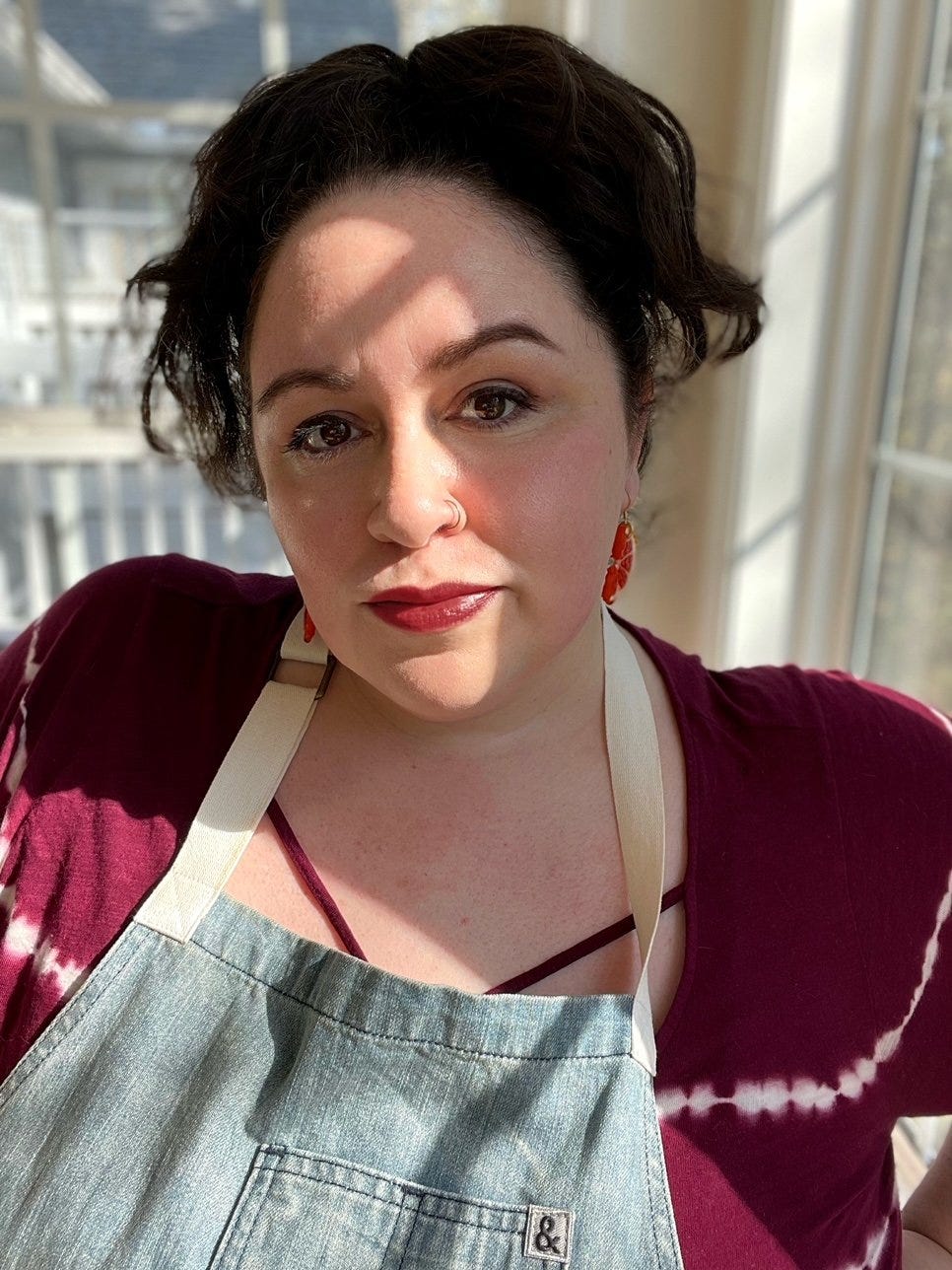
Teresa Finney is the owner of At Heart At Heart Panadería and the creator of Panadería, the first issue of her At Heart cookbook zine series, where she's navigating the intersection of food, publishing, and creative independence.
Teresa’s roots are in digital recipe development, but she reached a point of exhaustion with the online world and its algorithmic control. Panadería is her solution. It’s a physical, lasting expression of her work. It’s a way to create beyond traditional publishing and social media. It’s a way to put her recipes directly into the hands of those who value it.
But how does she balance the demands of running a bakery with the deeply personal and unforgiving process of self-publishing?
Teresa doesn’t need to separate her bakery, recipe writing, and zines. They are all expressions of her creativity. Let's dive into her story.
From Pop-Ups to a Full Bakery
Your bakery started with Instagram preorders and a trunk full of pink boxes. What was the turning point that led you to expand your business?
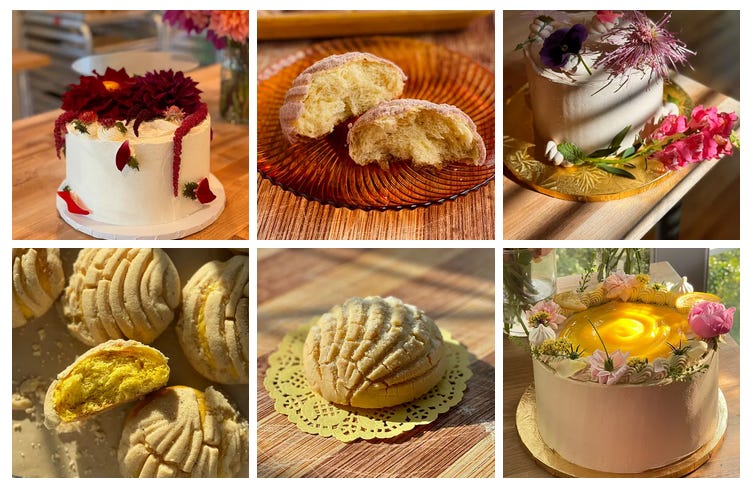
I owe it all to cakes. I introduced them to my menu in 2022, when floral cakes were really popular on the internet specifically on Instagram. But there wasn’t anyone offering floral cakes (I call them “garden cakes”) in Atlanta at the time, though I wasn’t thinking about it being a good opportunity for the bakery, or from a business standpoint. I just really wanted to make cakes, and think I saw it as a chance to be more creative with the food I was offering through At Heart. I grew up going to this little bakery back home in the Bay Area, CA for all of my family’s special occasions. Distinctly have wonderful memories of walking in and seeing rows of cakes on display atop the pastry cases and just being totally enchanted. That really left a lasting impression.
How did your initial vision for the bakery evolve over time?
Well, to start, I thought that I’d always stay within the boundaries of the cottage bakery industry. I thought I for sure would not ever want a brick and mortar, but that has changed over the last year. I really felt this after the presidential election last year, when working from home felt like being too far removed from the public. I wrote about this last year in an essay called “Bad at Business”, but the idea of offering a safe place to serve the public pastry and coffee in a friendly, safe space for the community to come and gather is important to me.
What's something about running a bakery that people romanticize but is actually much harder than they realize?
Well, I think that people tend to assume working for yourself is maybe more romantic than working for someone else. There’s not a whole lot that’s romantic about having to wake up at 2AM to get the conchas in the oven in time for a pop up that starts at 10am! When you run a really small bakery like At Heart, you’re doing everything yourself which can easily lead to burn out and resentment.
What role does community play in your approach to food and publishing?
I would say that At Heart is hyper-local. Wanting to support my immediate community–and offer them delicious food–is why I care about where the ingredients I use come from, for example. I bake with local to Atlanta, local to Georgia, local to the southeast of the U.S. produce for my menu as often as possible. For the writing/publishing aspect of At Heart, the local is a focal point in terms of what I tend to write about (being anti-capitalist and eco-feminist as a small business owner, mostly). Both of these aspects of the bakery are like pillars of my work with the community right at the heart center.
Stepping Away from the Algorithm
You've been online in some capacity since you were 14, and digital work has been essential to your career. When did you start feeling the need to step away?
I think the feeling started gradually last year in the months leading up to my 40th birthday. It dawned on me that it would be over 20 years of being online in some capacity and that just really made me want to take a deeper look and do some reflecting. But I’ve definitely softened a bit about my internet usage–it is a necessary evil-of-sorts in the work that I do.
What was the moment you decided to make the zine?
This happened around the time I was reflecting about 20+ years of internet use. I wasn’t exposed to zines growing up at all. It was because of the internet that I discovered zines and a love for them. There was some discussion in my online circles last year about cookbook criticism, and one of the critiques was that it’s hard to do.
We are living in a time where everything is built for engagement. What does it feel like to create something that doesn’t rely on algorithms?
I would say that the cookbook zines still rely on algorithms for getting the word out and in terms of marketing at least. But zine-making is definitely a different beast than content made for sharing online. For starters, it’s a longer, slower process but that was the aspect of making Panadería that I really enjoyed. A long-term project like a cookbook zine forced me to go to the depths (of myself; of a creative process) and that’s an experience one doesn’t always have when making art for the internet.
What challenges do independent creators face in traditional media and digital spaces?
I think there’s an aura of authority that independent workers have to immediately assign themselves. When I was first starting to develop freelance recipes that I just shared on my website’s blog, I knew that I had to write in an authoritative, authentic voice that let the readers know they were in good, trusted hands. Without a publisher or food media backing me, I think independent workers have the challenge of getting people to read them or engage with their work. It helped me, I think, that I’ve always written from that place of authority.
The Making of Panadería
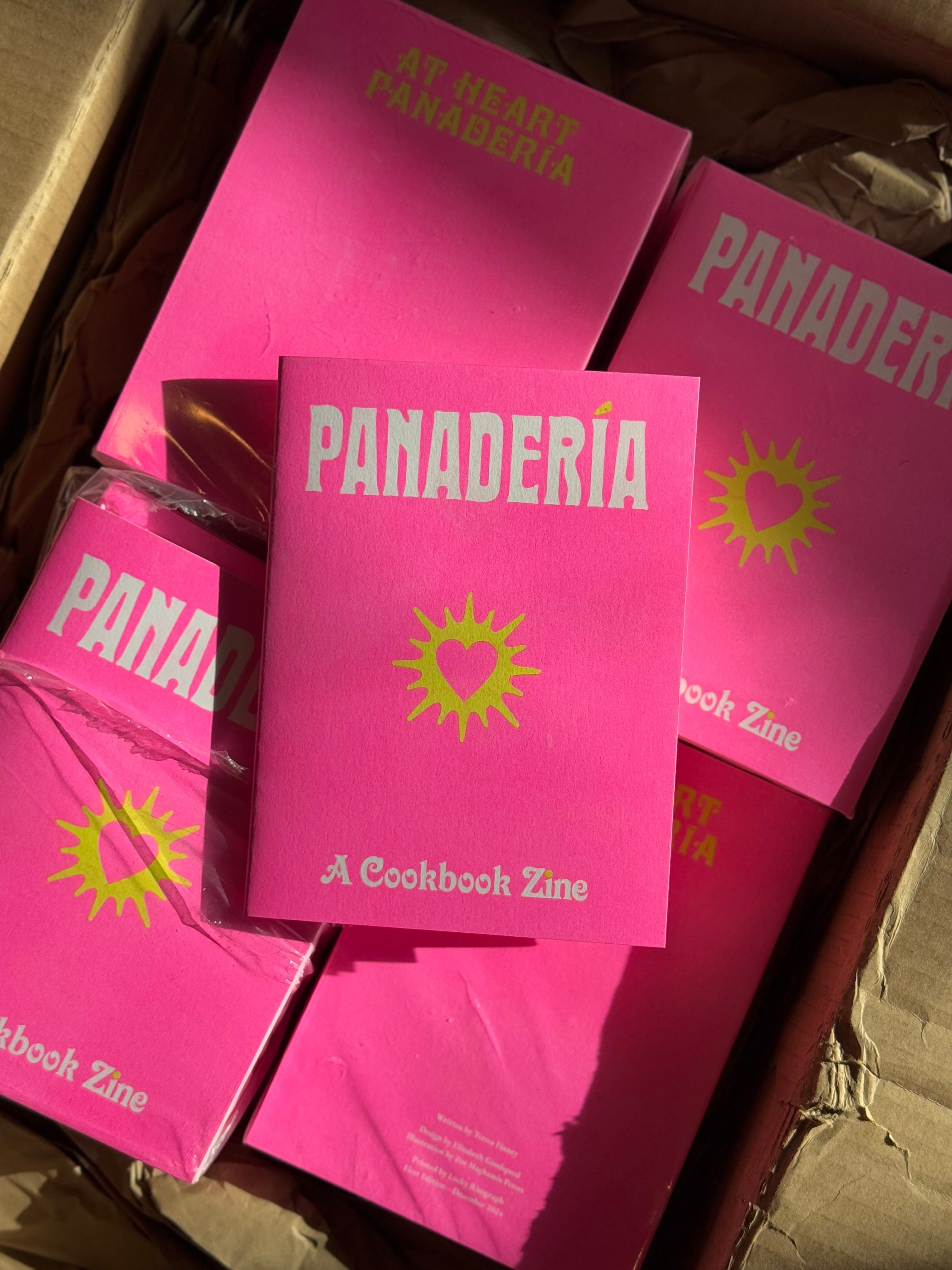
Many creatives dream about publishing their own book, but the traditional cookbook route is notoriously slow and gatekept. Why was self-publishing the right path for you?
I just felt impatient. I knew from talking to friends who have published books traditionally, and from speaking with a cookbook agent, that a social media platform is a big contributing factor to whether or not you get signed to a publisher. I wanted to skip all of that and just make the work I wanted to see out in the world. I have really found myself in self-publishing just as much as in baking. I think if I had gotten everything I wanted when I first started out–cookbook agent, large social media platform, virality–I would actually be a lot more unsure of myself and my ability to do my work.
You've said that Panadería is inspired by vintage community cookbooks and micro-format cookbooks like Short Stack Editions. What drew you to those formats?
I particularly liked that the Short Stack Editions were single-subject books. I loved the idea of dedicating an entire short format cookbook to one ingredient, though I didn’t end up going the same route with Panadería. I wanted some vintage elements in the design and community cookbooks with fun, sometimes goofy illustrations really inspired me.
You settled on five recipes. How did you decide what made the cut?
I went with At Heart classics, almost all of them featuring masa harina as a main ingredient. There had to be a concha recipe even though I’ve published many concha recipes to the internet; there had to be some cake recipes since that’s what people know me for; the focaccia recipe was a last minute addition after the recipe tests went so well.
How do your cultural background and personal history shape your approach to recipe development and the stories you tell through food?
I think most people who work with food in some capacity pull from their culture for influence. My masa harina use in sweets is directly related to making tamales with my family on Christmas Eve as a kid. So, it’s all related for me.
Creativity, Sustainability, and the Long Game
You've been hinting at this zine since 2017. What finally made this the right time?
My disinterest in making work that exists solely on the internet was the impetus for my zine-making!
You've made it clear you're not committing to a regular recipe publishing schedule. How do you balance creative sustainability with audience expectations?
This was definitely a big worry for me last year when I stepped away from constant recipe development. I was worried that I’d lose subscribers who signed up to my newsletter specifically for the recipes. But I think the people who sub to my newsletter–and even more so the people who pay for it–do so because they want to support whatever it is that I’m doing. And that relationship with my readers took time to develop. So, I’m really lucky and very thankful that even though my readership is still quite small, it’s an audience of people who aren’t projecting expectations onto me, other than just doing the good work they signed up to receive in their inbox.
What does success look like for Panadería and future At Heart zines?
Panadería is right now at the printer for a second printing, which is more than I thought would happen for the first zine. Of course I had hopes and goals, but you never know how work will meet people and if it will be successful in that way. For future cookbook zines, I’d just love it if they continued to sell out and get stocked across the country. Eventually, all of these zines will lead to Panadería the food magazine which is the next hope and goal.
How do you balance financial stability and creative independence?
I’m fortunate that At Heart does well with cake orders so I’m able to support myself, though I’m not making bank by any means. My income is supplemented through the newsletter from paid subscribers and zine orders, though I’m soon beginning my new role as pastry chef of a new restaurant opening this spring. I will have the most financial stability I’ve ever experienced in my adult life. I’m very grateful because I know that is so often not the case when working independently.
What support structures do independent creators need that currently don't exist?
All of the support structures for independent workers need to be financial, because it is money that’s the biggest hindrance for most artists.
Advice for Creatives
For people looking to step away from digital burnout and create something physical, what's the first step?
Look at the kinds of physical media you’re already consuming and then figure out a way to make what you want to see in the world.
What's one thing about self-publishing that more creatives should know before they start?
Consistency is everything. Pick a publishing schedule that you know you can stick to.
Looking back, what's one piece of advice you'd give to yourself when you were first exploring recipe development?
Be unafraid to go slower with recipe development; don’t create for the algorithm alone.
What resource, mentor, or experience has been most crucial in shaping your creative approach?
Making the switch from sharing my recipes on Patreon (I shared my work on Patreon for three years) to publishing my work on Substack was instrumental. Being among the kinds of writers and artists who value self-publishing and reading their work on a daily basis is like a testament to the fact that not only can it be done, but it can be done with style and consistency.
For aspiring writers, publishers, and creative entrepreneurs who want to break traditional molds, what's one intentional step they can take today to start creating their own path?
I take notes throughout my day and really believe in the almost mystical power of writing things down on paper. I would say to first have a strong vision for whatever creative project you want to work on, and then write that vision down in a notebook so that it lives in the material world. I find this first step really motivating.
Final Thoughts
Huge thanks to Teresa for sharing her journey, her work, and the realities of balancing creativity and business. If her story resonated with you, let her know.
If there's another independent creator or self-publisher you'd love to hear from, drop a comment below. I'm looking to feature more voices that challenge the norm and carve their own path.
If you enjoyed this conversation, share it with a fellow creative or subscribe for more interviews with people making their mark in unexpected ways.