
Celebrating Culture, Language, and Belonging Through Picture Books with Sylvia Gallardo
And why every identity matters.

Standout Authors Unbound amplifies the voices of underrepresented writers and indie authors to disrupt an industry that rewards conformity over authenticity.
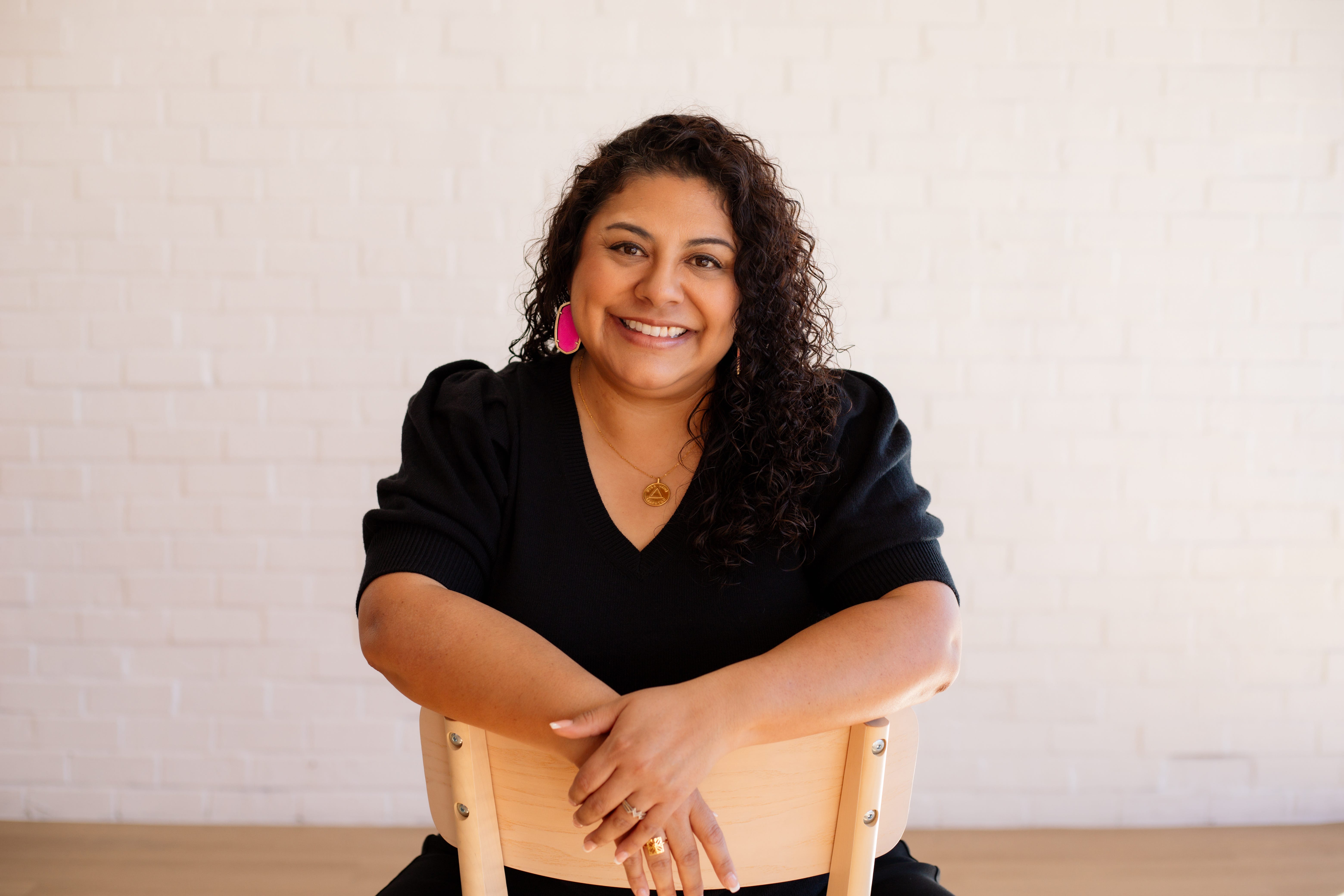
Sylvia Gallardo is a children’s author and educator with over 17 years in the classroom, creating stories that celebrate Latin culture, bilingual identity, and the power of language. Her work is rooted in honoring the stories she wished she’d seen growing up and reminding children that their culture belongs at the center of the page.
Through her platform, Sylvia lifts up diverse picture books, highlights Latine authors, and builds resources for educators and families who want children to feel seen, supported, and proud of who they are.
Origins and Inspiration
You’ve said you’re writing the stories you wish you’d had growing up. How did your bicultural upbringing shape that realization and how did that same part of you show up most vulnerably in your upcoming book?
Growing up in Texas near the U.S.–Mexico border, people often assumed I was Mexican. That was never something that offended me, but as a child, I felt a strong desire for people to know that my roots extended further south. I was proud to be Central and South American. At home, my mom cooked Salvadoran food, my dad played Ecuadorian music, and my Spanish reflected both worlds. From an early age, I was constantly navigating multiple cultures and identities.
That experience made me realize how rarely I saw books that reflected that kind of complexity. Most stories didn’t leave room for kids like me, kids who didn’t fit neatly into one box. Writing the stories I wish I’d had growing up means returning to those early feelings of wanting to be fully seen, and that’s where the vulnerability comes in.
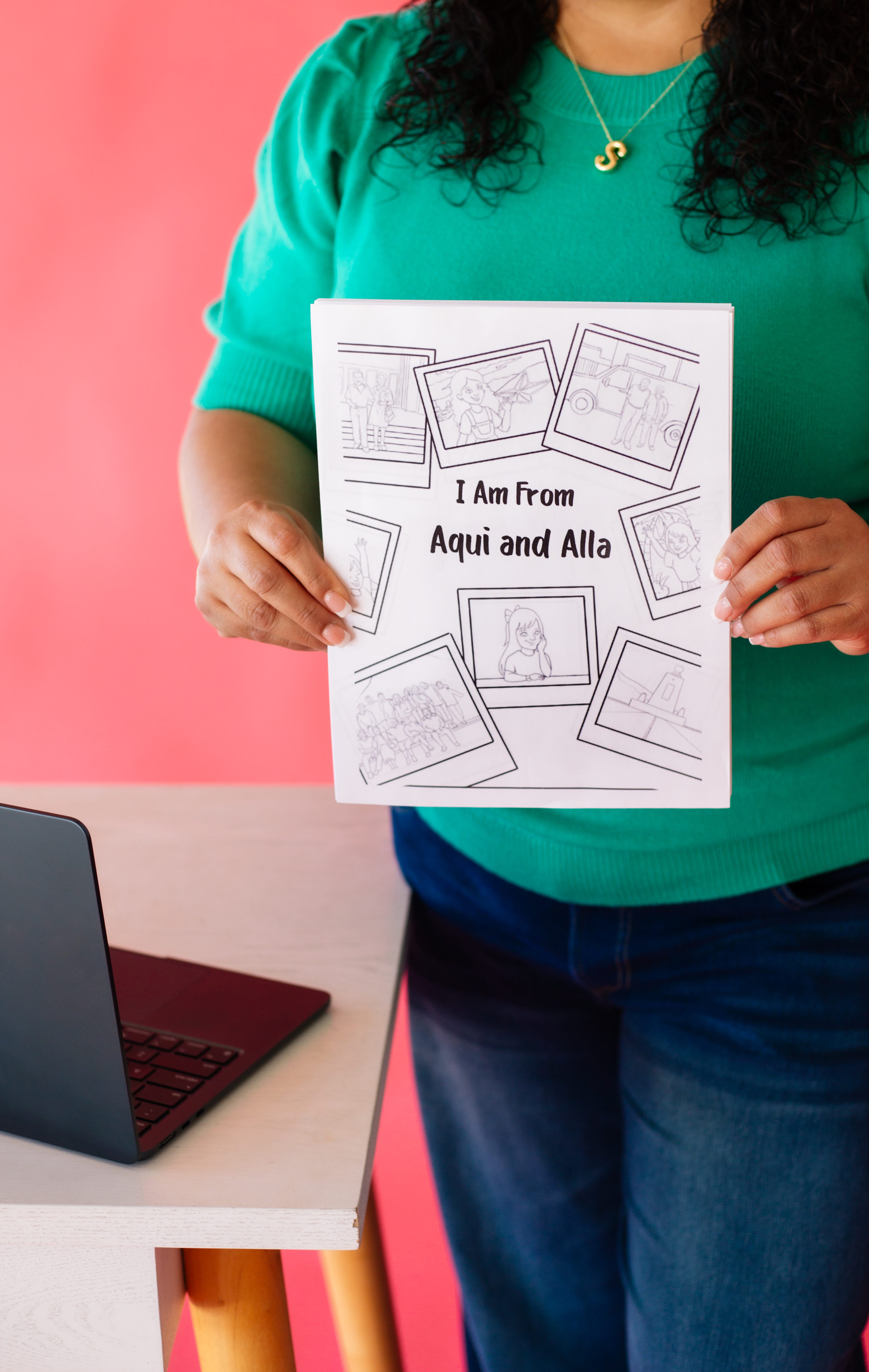
In my upcoming book, I Am From Aquí and Allá, that part of me shows up through small, everyday moments—language, food, music—and through the message that we don’t have to belong less to one culture in order to claim another. We can be fully both, and I wanted to create the kind of story that affirms that truth.
The Classroom Behind the Stories
You’ve spent over 17 years in the classroom. How did that experience influence the kinds of stories you feel called to write now?
Spending over 17 years in the classroom showed me the power of books to spark curiosity, conversation, and connection. As an elementary ESL teacher, I saw how deeply students respond when they recognize their own culture on the page. I could tell they were eager to share their own stories with their peers. That became especially clear when I organized a Multicultural Night at my school and watched students confidently celebrate where they came from. Those experiences helped me see that representation matters, and it’s what motivates me to write stories centered on cultural foods, music, and traditions that affirm identity and belonging.
When you imagine your students reading your work one day, what do you hope they recognize in themselves?
I hope they recognize that they can be proud of where they come from and that their identity is unique and special, even when it’s shaped by two or three cultures. For Latino students in particular, I hope they see a celebration of community, reflected in our shared language, foods, and traditions. Most of all, I want them to feel confident being bicultural and empowered to share their own stories.
Craft, Picture Books, and Community

You share and recommend a lot of picture books from diverse and Latine authors. What makes a picture book stand out to you as something that truly matters?
Picture books that center cultural identity and self-love stand out to me because they validate experiences that were absent from my own childhood. I often think about how powerful it would have been to see myself reflected on the page and how that sense of being seen might have shaped my confidence and relationships in school. When children recognize their own lives and cultures in a book, it sends a clear message: their stories matter, their voices are important, and they belong.
How do you balance lifting up other authors’ voices while also making space for your own creative work?
When I started writing my first draft of I Am From Aqui and Alla, I didn’t fully understand how much work goes into this process or how supportive the kid lit community can be. Being on the other side of it now has given me a whole new appreciation for children’s book authors/illustrators and the vulnerability it takes to put a story out into the world. I try to lift up other writers by sharing and celebrating their work because I know how much that visibility matters. At the same time, I’ve learned that making space for my own creative work is important too. For me, it’s not about choosing one or the other, but about contributing to a community where we’re all supporting each other while continuing to write the stories only we can tell.
Representation and Lifting Up Voices
You’re on a mission to “lift up OUR voices.” What does that phrase mean to you personally?
“Lifting up OUR voices” means challenging the gaps in representation that still exist in children’s literature and working together to change it. As an ESL teacher, I encourage students to believe their voices matter, yet I often struggled to find picture books that reflected their cultures and languages.
Those gaps made it clear that progress has been limited, and realizing that has pushed me to advocate more intentionally. Lifting up OUR voices now means supporting Latine creators, pushing for greater visibility in publishing spaces, and contributing my own stories as part of a collective effort to ensure our voices are seen and valued.
From your perspective, what progress feels most meaningful right now in Latine children’s literature and where do you still see important gaps?
One of the most meaningful signs of progress right now is seeing more Latine creators and more Latine stories being published. What really stands out to me is when authors and publishers are intentional about moving beyond stereotypes and telling nuanced stories that reflect the true diversity of our communities, especially stories from Central and South America.
At the same time, there are still important gaps. Many Latine books are hard to find in mainstream bookstores, school book fairs, and classrooms, and certain cultures and experiences remain underrepresented. I’ve often discovered more diverse voices through social media rather than traditional spaces. Another area I still don’t see enough of is bicultural identity, which is something I hope to contribute with my upcoming book
Your Upcoming Book
At its heart, what do you hope children, and the adults reading with them, walk away feeling after experiencing your new book?
At its heart, I hope I Am From Aquí and Allá leaves both children and the adults reading with them feeling proud of who they are and where they come from. I want the book to be a celebration of biculturalism, especially for those who have felt like they’re not “enough” of one or the other. I’m proudly American, and I’m also fully Salvadoran and Ecuadorian. I hope readers see that wholeness reflected on the page. Ultimately, I want the story to celebrate both our shared connections and the unique flavors, rhythms, and traditions that make each culture special.
Looking Forward
As you move closer to publishing your debut book, how has your relationship with your own voice changed?
My relationship with my voice has grown stronger. I used to talk myself out of sharing my ideas because of fear and self-doubt, and I didn’t believe my words really mattered. I was hesitant to share early drafts, but this journey has taught me to do it anyway, even when I’m scared.
Along the way, I’ve realized this story isn’t just for me, it’s for bicultural kids who deserve to see themselves reflected. Finding a supportive community of writers has also made a huge difference. Learning from and connecting with other authors has helped me trust my voice more and feel more confident telling my story.
What excites you most about this next chapter as an author, educator, and advocate?
I’m excited to continue learning and building community. I love connecting with authors and educators, and I get especially excited when I discover a new Latine author or illustrator and can share their work with teachers and families who are looking for culturally meaningful books. Through my platform, @storiesbysylviagallardo, I enjoy highlighting incredible Latine creators whose stories deserve to be in classrooms and homes. I’m also really excited to have a Spanish version of my upcoming book and to keep growing as a writer along the way.
Closing Reflections
Who are the authors in your circle who deserve a little more of the spotlight?
Lisa Cortez is a Speech Language Pathologist who wrote The Adventures of Marie and Leela. Her book is in English and Spanish. I feel a lot of students who are receiving speech services can benefit from a bilingual book that helps them with sounds in both languages. Follow her @theadventuresofmarieandlee
Josefina Cabello is a Spanish teacher and author. She wrote, A Veces en Ingles, a Veces en Espanol. A story I would have wanted as a child and one that resonates with many bilingual children. Join her characters as they go on adventures listening to both languages. Follow her @mrscabellosc
Evelyne Perez is from my hometown, El Paso, Tx, and she wrote Brown y Brillante as well as Autism: A New Friend and Buds Vs Bullies. Follow her at @evelynetheauthor.
And last question. If standing out isn’t about being louder, what does it look like for you?
For me, standing out isn’t about being louder. As a Latina educator and advocate for multilingual learners, it’s about being intentional. It’s about making sure my students feel seen, valued, and proud of who they are. Their bilingualism and biculturalism aren’t things to downplay, they’re strengths that deserve to be celebrated.
As an author, standing out means sharing my story and honoring the diversity within the Latine community. We’re often grouped into one box, but our experiences, cultures, and identities are so much more layered than that. I believe our stories are best told by us, because we’re the ones living them every day.
Sylvia’s work reminds us that stories should be affirming. Her love of picture books, her years in the classroom, and her commitment to lifting up Latine voices all come together in a body of work that helps children feel seen in their language, their culture, and themselves.
This is exactly why I started Standout Authors Unbound. To create space for writers like Sylvia. Writers who are building community through story, honoring lived experience, and expanding what belonging looks like on the page.
If you’re writing from a place of identity or cultural truth, or know someone who is, I’d love to hear from you. Share this piece, leave a comment, or reach out.
I love discovering fellow teachers. Thank you, Kevin, for highlighting Sylvia!
What a beautiful celebration of culture, language, and belonging. Sylvia Gallardo’s work highlights how powerful picture books can be in helping children see themselves and feel valued.