
Bringing Latina Voices to Children's Literature with Delia Ruiz
How she wrote stories kids couldn’t find


Standout Authors Unbound amplifies the voices of underrepresented writers and indie authors to disrupt an industry that rewards conformity over authenticity.
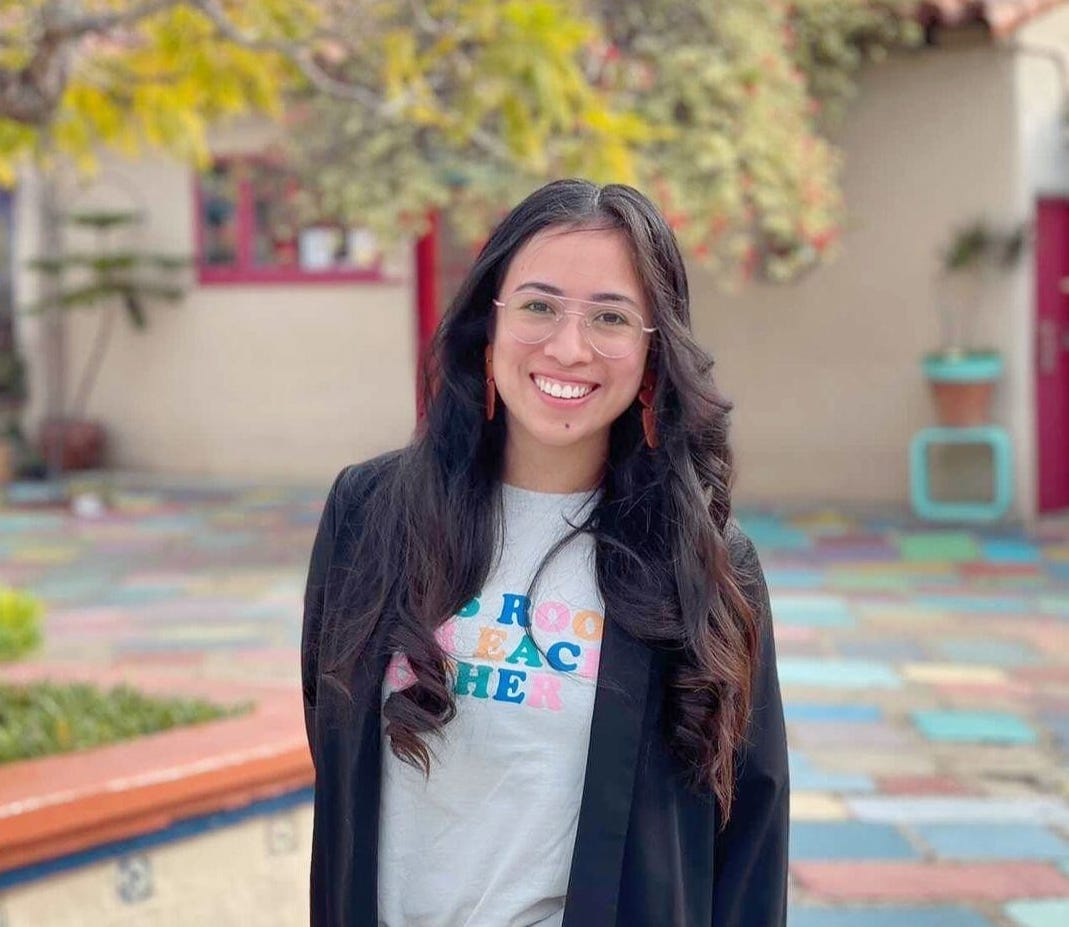
Delia Ruiz @aventuras.en.esl is a first-generation Latina author from San Antonio who’s bringing more color, rhythm, and representation into kids’ books. Her ¡123Baila! series and Roqui’s Pandero Beat have earned major recognition and celebrate the joy of bilingual stories.
With a master’s in TESOL, Delia started writing when she couldn’t find the books her ESL students needed. That spark turned into a career built around storytelling, reviewing books, and helping more Latine voices get seen.
She now lives in Puerto Rico, continuing her mission to inspire young writers from immigrant families and to share books that reflect the real depth of Latine culture.
Origins and Inspiration
You went from ESL teacher to award-winning children’s author. What was the moment you realized you needed to write the books your students couldn’t find?
I found myself constantly translating on the spot while doing read alouds because there weren’t enough bilingual and Spanish books. Those written by Latine authors were very few and there weren’t enough stories about a variety of experiences my students shared. Sure, there were immigration stories but where were the joyous Latine stories? The stories of everyday life? This sparked an idea of how can I combine teaching standards and still share a story that my students could relate to.
How have your first-generation experience and TESOL background shaped the way you approach bilingual storytelling for kids?
I was an ESL student during my elementary years. I wanted to write when I was younger but I didn’t know that could be a career so I went into something I was passionate about: Teaching English to Speakers of Other Languages. During my time in the classroom I was able to do lots of writing activities for language learning and learn about my students’ journeys while practicing our bilingual storytelling. Read alouds were our go-tos and students were able to listen to their native language (Spanish) while learning a new language (English). Bilingual storytime was what helped narrow the gap between both worlds in the ESL classroom.
Who were the authors you loved growing up, and where do you see their fingerprints in your writing today?
Growing up, my teachers read a lot of animal books so I didn’t connect with a particular author in the elementary years. It wasn’t until 7th grade when we had to read Esperanza Rising and I felt a lightbulb and connection turn on. Today I work at a book festival where we hosted Pam Munoz Ryan this fall as our spotlight feature and I got to listen to her 25th celebration of a book that laid the foundation for my book journey inspiration. Seeing that representation validated that I could be on that journey someday.
Craft and Writing Life


When you’re creating bilingual books like !123Baila!, what challenges come with making sure both languages carry the same emotional punch?
The 123 Baila board book series was a challenge to work on because it had to rhyme in English and Spanish and it also had to be translated to mean the same thing. I worked on the translation piece first and then focused on ways to fit the rhyme on each line. The good thing is I had editors in the traditional publishing space who assisted with the edits which is how I was able to tweak and make it flow in both languages.
You’ve explored both traditional publishing and self-publishing. What have each of those paths taught you?
Self publishing taught me the most because you’re doing everything yourself (writing, hiring an illustrator, editors, print run, etc). This was a great experience because I learned how the book process works and how to get into big bookstores and register everything. This allowed me to advocate for my own work in the traditional publishing space because I knew the timeline of the book process and how to market months in advance. Traditional publishing taught me how to research accordingly and create pitches related to my stories. Publishers need to sell so when you can convince them how your story ties in with statistics, research, or show how it’ll teach XYZ then you have an advantage when selling the manuscript.
How has your move to Puerto Rico shifted your creative perspective and the stories you’re drawn to now?
Moving to Puerto Rico in 2024 gave me a sense of inspiration because life feels a little bit slower compared to the U.S. Having a slower pace gave me more clarity to go back to my revisions and complete some of my stories that were left as drafts for a while. I have always been drawn to stories about Latine joy and family connections and I’m around this in PR which is beautiful.
What does your writing day look like, especially while balancing creative work with life as a mom to a toddler?
I’m a very type A person so I have a set schedule to work, to parent, and spend time with my family. My toddler has a set routine for play/naps at the same time everyday so I’m able to schedule writing breaks during sleep time. I don’t always write but I do something related to writing: draft, quick sketch of an idea, listen to a song related to my scenes/characters, go on a walk, reflect, jot down a note, etc. Writing isn’t always pencil to paper and taking a pause from actual writing helps me to take my time to create stories.
Representation and Impact
As a reviewer focused on Latinx children’s literature, what trends are you seeing right now, and where are the gaps that still need attention?
Some trends I saw of 2025 Latinx books (which means they were trends about 2 years ago when authors first signed) were themes of the power of bilingualism, dealing with big emotions, and nonfiction Latine heroes. Some books I’ve love to see more are Latine humorous stories, books about different native dishes, and more stories based outside of the U.S. setting.
Winning an International Latino Book Award for Roqui’s Pandero Beat is a huge milestone. What does that recognition mean for you and for visibility in Latinx storytelling?
Since it was my first book, it felt like a validation that I was going in the right path. The book allowed me to connect with many educators and bring a spotlight to my social accounts. I started collaborating with other authors using my books+theirs in collaboration pieces. Award winners are also invited to in person conferences where I connected with other book lovers so overall it opened many doors and gave me the confidence to continue writing and to continue showcasing other Latine stories.
Beyond entertainment, what do you hope children, especially kids from immigrant families, take away from your books?
My latest book, Ways Papi Says I Love You, is one many Latine immigrant students have related to in recent school visits. It’s the only story I have that’s based outside of the U.S. in a rural ranch setting. The pages show dirt roads, Latine families, a plaza, community helpers, and concrete homes similar to many places throughout Latin America and the Caribbean. Seeing a snapshot of home brings connection and memories to the places immigrant families leave behind. Many of the Latine immigrants who come to the U.S. for more opportunities come from rural settings where they have to leave home for job opportunities. Often times the book publishing space features Latine places where there are big cities, beaches, and have more of a touristy illustration but I wanted readers to connect with the beauty of a rural setting and offer immigrant families a story they can read together (since it’s also available in Spanish) and a story where they can have a slice of home on each page. I remind students that I came from this journey as a first gen and they can also follow this career path and/or share their own stories one day.
What’s the most meaningful feedback you’ve ever received from a young reader?
The most meaningful feedback I received from young readers came from a school visit when I asked them what stories they want to read. They gave examples of funny stories with ghosts, a dog story, food books, stories with grandparents, and many more. I have drafts of all their ideas combined with my own experience. I hope to go on submission these ideas soon!
Looking Forward
You’ve been navigating a career transition. How has that shift changed the way you think about your writing life?
To me, writing is an art. It’s something I want to do at my own pace vs creating for money or because a publisher wants X amount of books. I work as a freelancer in the book industry and create my own stories when inspiration hits. I have an agent who doesn’t rush me and is open to reviewing my work when I’m ready. I am also a mom so I’m constantly paying attention to the kind of stories my toddler enjoys and taking note of what makes a good page turn. I want my writing life to be something I always enjoy and I hope to keep it that way without any external pressures.
What project are you most excited about right now, and how does it build on, or break away from, what you’ve done before?
My latest project is Ways Papi Says I Love you, a story about the 5 love languages based in a rural ranch setting. It comes out in 2026 (almost!) and it’s the story of my heart. It’s the story that landed me an agent and one I feel the closest to since I grew up in a rural place before coming to the U.S. at the age of 6. This story is rooted in the many ways we express love. I’ve had many adult readers tell me how love was shown as kids and how they’re doing things differently now for their own kids. Many first gen Latine readers I surveyed told me that love wasn’t always shown with “I Love Yous” or with hugs/kisses instead it was with a plate of food, with quality time, or sometimes a small gift. I also had this experience and I was able to connect a universal theme (love) to a personal experience (growing up in a ranch) to create a book many readers could relate to (love languages). I hope this book will spark conversations of love preferences and how to receive and give love in a way that’s preferred.
What advice would you give to writers from immigrant backgrounds who still don’t see themselves reflected in publishing?
I always think of the quote that says “If you don’t see it, create it.” There is space for all of our stories and different ways to publish a book. A “No” is not a closed door. I believe we all have a story to tell and if you’re not sure where to get started, ask. Connect with other writers to guide you to a resource or first steps and get the story out there. There’s so many books I’d love to see on shelves and we need more writers out there taking the leap to publish their work.
Closing Reflections
Who are the authors in your circle who deserve a little more of the spotlight?
I could name so so many! There’s a collection of Latine writers called Las Musas that have wonderful stories. There’s also new and upcoming Latine authors I’ve had the privilege of reading their work such as:
Erika Andrade Smith does hands on Latine board books. Her latest books feature how to roll tortillas into letters and a new book on paletas. Connect with her at @labiblioterika
Cynthia Ruiz is an upcoming Latina author who has a talent with voice in her writing and is working on a young adult book on loss, grief, mental illness and first-generational trauma. Connect with her at @ibrosdenopal
Sylvia Gallardo is an upcoming picture book writer. Her stories feature her Ecuadorian Salvadoran roots along with yummy recipes! Connect with her at Sylvia Gallardo
And last question. If standing out isn’t about shouting louder, what does it look like to you?
I see standing out as a community win and not as an individualistic highlight. In the book world I love seeing stories I wish I had growing up and love celebrating when my author friends can hold their stories as an official book. When we get to share stories that become a child’s favorite book then it’s a win. One book at a time is how we can continue to bring light to our communities and embrace diversity on the pages.
Delia’s work reminds us that representation is about being felt. Her stories make space for bilingual joy, everyday moments, and the quiet ways love is passed down in immigrant families.
This is exactly why I started Standout Authors Unbound. To make room for voices like Delia’s and help stories rooted in lived experience reach the readers who need them most.
If you or someone you know is writing from lived experience or building community one book at a time, I’d love to hear from you. Share or comment on this piece. The next story we celebrate could be yours.
 | A guest post by
|
Thank you for the invite and for all your work highlighting authors 🎉
Great article! Can’t wait for my kids to read Sylvia Gallardo’s upcoming book! @storiesbysylviagallardo