
Breaking Silence and Building Hope with Morgan Klein
Finding strength through dark queer stories

Standout Authors Unbound amplifies the voices of underrepresented writers and indie authors to disrupt an industry that rewards conformity over authenticity.
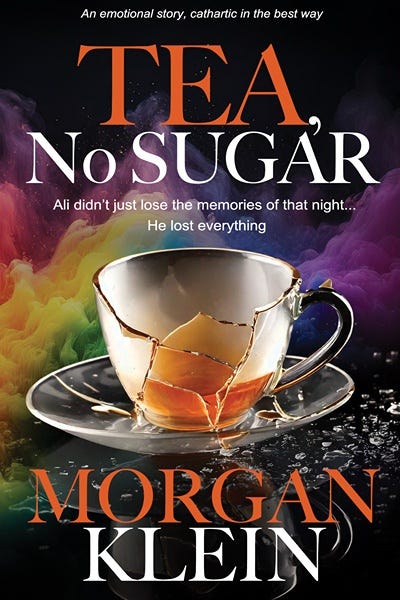
Morgan Klein writes crime and romance fiction that’s dark, queer, and overflowing with tea. He is the author of Tea, No Sugar and the upcoming Moon Street Hate.
Growing up under Section 28 in the UK, Morgan learned early how important equality and visibility are. These lessons shape every page he writes.
From gritty queer cops in Bristol to messy, tender romance, his stories put LGBTQ+ voices front and center, exploring the edges of love, morality, and identity.
Finding Your Voice
What’s your earliest memory of storytelling that felt like it belonged to you? Are there any authors or writers who made you feel like you belonged?
Crime fiction played a huge part in my formative reading years. I’d spend as much of my summer holidays reading John Grisham as I could. Looking back, the complexity of the cases, the police procedural aspects, and the depth of the character psychology all appealed to me.
Michael Nava’s Henry Rios series was really my gay book awakening, if you will—where my love of crime fiction met a lead character who was unapologetically gay. It was a magical few months reading that series, and I still consider those books one of my all-time favourite series.
Growing up under Section 28, how did that environment shape the kind of stories you wanted to tell?
It took me years to understand and realise the negative impacts of Section 28 on me as a gay man. Anything to do with LGBTQ+ people was cloaked in shame, secrecy, and always sexualised in a way that made it feel inappropriate and dirty. There were zero role models, positive character representations, or even people on TV who weren’t cloaked in the same shame or dishonesty. I’m still working through some of these issues, so I think these themes show up in my characters too.
When did you realize that writing crime and romance could be the space where your queer perspective mattered?
Probably in my early twenties is when I really discovered the world of gay fiction and MM romance; at that time I started to learn and read as much as I could.
On Identity and Influence
Your work is dark, queer, and deeply human. How do you decide what personal experiences or truths to weave into your fiction?
I’m probably working more on what would be called gay literary fiction rather than romance at the moment, but love, relationships, and the complexities of those are all themes I explore. Hope is something I promise my readers because I think the full spectrum should be available for people to read, to remember, and to not brush over or ignore the negative things that queer people have been subjected to—and still are in many, many places.
How has your identity as a gay man influenced the worlds, characters, or themes you gravitate toward?
A great deal, because it’s who I am, from head to toe. It shapes how I see the world and how I navigate my job, my family, and how people treat me. I’d find it hard to write characters who weren’t primarily queer, because there is still a fire burning in me, and until that sense of injustice and anger dissipates, I’ll likely be drawing inspiration from those worlds.
The Craft of Storytelling
Your debut, Tea, No Sugar, deals with heavy, complex topics. How do you approach writing stories that are both dark and meaningful without overwhelming the reader?
Parts of me come across in all my characters so far, and I draw on real experiences, anecdotes, news stories, and events that are completely made up but based in truth. That’s the joy of fiction: the lines between reality and invention are blurry. I include content warnings for readers, and my current style and themes might well be too much for some, but most of what I write has a foundation in reality, so as long as these stories come across my consciousness, I’ll share them. I hope they reach the right people dealing with similar issues and that they can see, however dark things get—and they do get dark—there is always hope. Always.
Romance and queer representation are central to your work. How do you balance tension, intimacy, and realism in your storytelling?
It’s all about emotions for me. Readers have commented that I go all in, and I’d agree! I love to immerse myself in the dialogue or the character’s situation and let the words flow as I imagine the characters saying them—and feel them too. Unfortunately for our characters, tension means things have to keep going wrong, and they have to move away from their goals. In romance, that’s finding love, so it’s going to get a lot worse before it gets better.
Your Queer Cops series will follow six officers with distinct voices. How do you approach character development to ensure each voice is authentic and resonant?
That’s a tough one! Character sketches helped me, and I would go and spend a minute with the character’s photograph before I wrote their scenes, to get into their skin a little. I’m also writing based in Bristol, UK, which is a very multicultural and diverse place, and I want my characters to reflect that, so I seek out sensitivity readers for experiences, ethnicities, identities, and sexualities outside my lived experience when my portrayal could be negatively adding to representations of those groups of people. No group is a monolith, of course, but it’s always good to get feedback and different insights—and who wouldn’t want a richer, deeper, more nuanced cast of characters?
Challenges and Resilience
What obstacles have you faced in getting your work published or recognized?
Publishing is hard! It’s taken me a couple of years to build a small mailing list with the few reader magnets I have available, and keeping that updated and talking with readers can feel like a full-time job sometimes! But I try to be pragmatic and realistic about what it means to be an author, and I’ll invest my time and energy when I can. I’m also not reliant on any author income because I work full-time, and I want to keep my writing as an artistic and creative pursuit, not let money become a motivator or influence. Of course, I’d love a Penguin book deal, but fame and fortune would be an added benefit, not the goal for me.
How do you stay motivated and focused when the industry or audience doesn’t always make room for your stories?
I keep going back to my teens, and every time that flame of anger is still burning. Anger about how I was treated, how people are still being treated, and how many places are still repeating the same old shit. Raising awareness and spreading hope are my primary motivators, and perhaps once I’ve got some of this anger out of my system, I’ll settle down and write some fluffy rom-coms, but let’s see!
Looking Ahead
If there’s one thing you hope readers take away from your stories, what would it be?
We are stronger together and there is always hope. Don’t listen to those seeking to spread hate and division. Find your people.
How can other aspiring queer or marginalized authors find their voice or claim their space in a literary world that often overlooks them?
Find community. There are many options online, and likely options in your city for LGBTQ+ reading, writing, arts, or creativity groups. You’ll find your people there. Keep on writing and keep on producing art. Put your words out there, even when you think they aren’t good enough, and even when you think nobody is listening. Plant those seeds, and keep building.
Closing Reflections
Who are other authors in your circle, that you know, who deserve the spotlight?
Kali Benson is a new author who inspires me with their wit and words. Nicky James writes some of the best MM crime fiction that I’ve had the pleasure to read. Blake Alwood is doing great things in bringing together thousands of gay fiction authors and readers online. Some recent favourites have included: Tal Bauer, Lance Lansdale, M.A. Wardell, and Joe Satoria.
And finally, if standing out isn’t about shouting louder, what does it mean to you?
Standing out means taking a risk by being yourself whenever it is safe to do so. People can ignore loud voices, but they can’t avoid a wave of whispers working together to highlight that something isn’t right, point out an injustice, or demand change.
Always happy to chat about queer fiction. morgan@authormorganklein.com
Free reader magnet and Tea, No Sugar information:
Morgan’s work reminds us that standing out means writing the truth, even when it’s uncomfortable. His stories hold both the grit and the grace of what it means to be human, queer, and unafraid to go deep.
This is exactly why I started Standout Authors Unbound. To share the stories of writers like Morgan, and how we can pass on stories of hope.
If you or someone you know is pushing boundaries, reclaiming identity, or telling stories that deserve more light — I’d love to hear from you. Share or comment on this piece. The next voice we amplify could be yours.